
Should You Stay Home During a Roof Replacement?

Should You Stay Home During a Roof Replacement?
By Rex Pisan, Hidalgo Brothers LLC
A roof replacement will affect your daily routine and requires careful planning. Many homeowners ask whether to remain at home or relocate while work proceeds. Staying lets you oversee the project and speak with contractors directly, but it also means coping with noise and limited access to parts of the house. This guide outlines what to expect during a roof replacement, covering safety, likely disruptions, and practical preparations, and compares the advantages and drawbacks of staying on site versus leaving temporarily.
This article provides homeowners in Morris County, NJ, with clear, practical information. We cover safety precautions, typical timelines, noise impacts, and steps to prepare your property. Learn more about the homeowner education resources available to help you through this process.
Key Takeaways
Roof replacement involves safety risks requiring homeowners to keep children and pets away from the work area.
Noise from roofing work can disrupt daily activities, making communication about schedules essential.
The process includes assessment, removal of old materials, installation, and thorough cleanup stages.
Homeowners should prepare by securing belongings and clearing contractor access paths before work begins.
Typical roof replacement in Morris County, NJ, lasts one to three days depending on roof size and weather.
Staying home allows for direct oversight and communication but may increase exposure to noise and disruption.
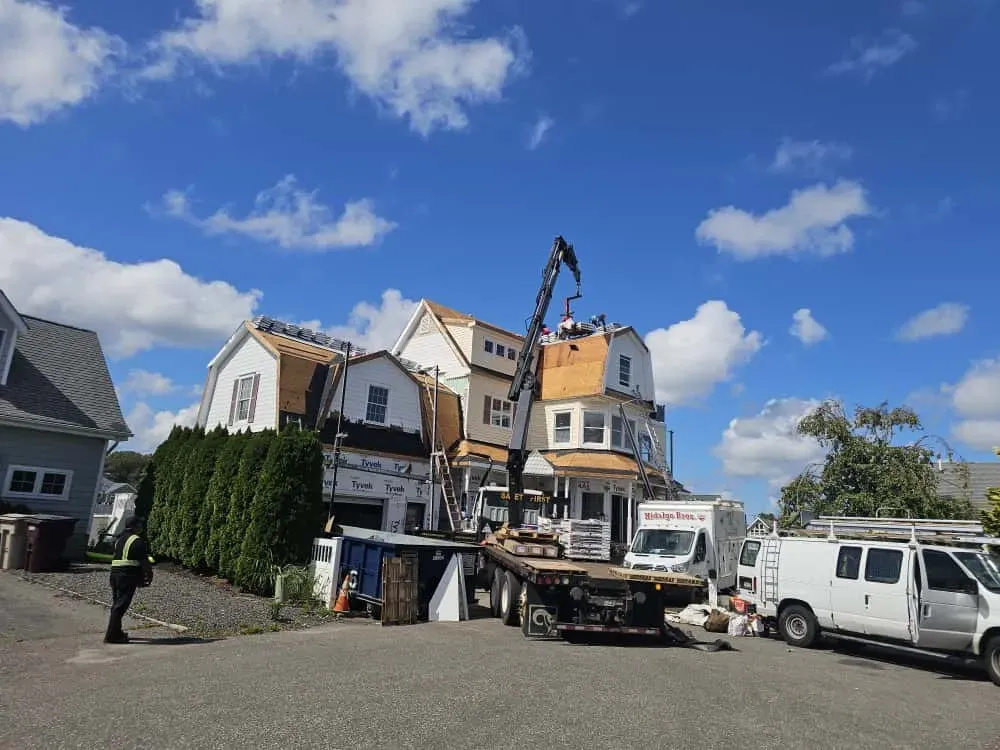
Contractors implement safety measures like signage and organized workspaces to minimize hazards on site.
Choosing roofing materials affects installation complexity, timeline, and homeowner expectations.
Effective communication with contractors and neighbors helps reduce stress and manage project disruptions.
Safety Considerations
Roof replacement carries several safety hazards. Heavy materials, tools, and equipment can create unsafe conditions around the property. Keep children and pets well away from the active work zone to prevent accidents. Contractors must follow established safety procedures to protect workers and household members alike.
Clearing obstacles, keeping walkways visible, and displaying appropriate signage reduce on-site risks, especially when multiple workers are present. Review official guidance from the New Jersey Department of Community Affairs - Codes & Standards for relevant codes and safety standards before work begins.
Potential Disruptions to Daily Life
Roofing work commonly disrupts daily routines. Noise from hammers, nail guns, and power tools can interfere with working from home, rest, and family schedules. Some rooms or exterior areas may be harder to access while crews stage materials and equipment.
Agreeing on work hours and a project timeline with your contractor helps reduce surprises. Clear expectations make it easier to plan around the most disruptive periods and preserve household calm.
Overview of the Roof Replacement Experience
A roof replacement proceeds through defined stages that require coordination between the homeowner and the contractor. Proper preparation and regular communication will reduce uncertainty and help the project stay on schedule.
Key Steps in the Roof Replacement Process
Typical steps include an initial assessment of the existing roof, discussion of material and installation options, removal of the old roofing, installation of the new system, and a final clean-up. Expect some debris during removal; securing the perimeter and clearing ground-level items helps protect your property.
Final Inspection
After installation, a final inspection confirms that the work meets required standards and that the site is clear of debris. This review provides assurance that the roof has been installed correctly and that the property is ready for normal use.
Which Phases of Roof Replacement Impact Daily Home Life?
Certain phases affect daily life more than others. Preparation may limit access around the house. Installation is the loudest and most disruptive stage, so plan accordingly. A prompt, thorough cleanup improves homeowner satisfaction and restores normal household use.
How Do Roofing Materials and Installation Steps Affect Homeowner Expectations?
Material selection influences installation complexity, cost, and schedule. Some materials require more time or special handling, which can extend the project and affect on-site activity levels.
Discuss material options with your contractor before work starts to match expectations for timeline and final appearance.
What Safety Considerations Should Homeowners Know During Roof Replacement?
Safety is a primary concern throughout the replacement. Be aware of fall risks and the potential for airborne debris during removal and installation phases.
What Are Common Safety Risks and How Can Homeowners Minimize Them?
To reduce hazards, keep children and pets inside or away from the work zone and follow contractor guidance on safe zones. Clear communication about safety procedures and site limits helps protect family members and visitors.
How Do Contractors Implement Protective Measures on Site?
Contractors often mark clear pathways, require appropriate safety gear, and keep the work area tidy to limit hazards. Confirm these measures are in place before work begins and raise concerns promptly if standards are not met.
What Is a Typical Roof Replacement Timeline and How Does Noise Affect Home Comfort?
Most roof replacements take one to three days, depending on roof size, installation complexity, and weather. Expect elevated noise during removal of old materials and placement of new ones.
How Long Does Each Stage Usually Take in Morris County NJ?
In Morris County, NJ, the initial consultation may take a few hours, while the installation commonly spans one to three days. Weather and roof size can alter these estimates; plan with flexibility. For local information, see the Morris County government website.
What Noise Levels Should Homeowners Anticipate During Roofing Work?
Expect high noise levels during active roofing work, often similar to other heavy construction tasks. Knowing when the loudest periods will occur makes it easier to schedule quiet activities or leave the house temporarily if needed.
How Should Homeowners Prepare Their Property Before and During Roof Replacement?
Preparation reduces risk and speeds progress. Protect valuables, create clear access for crews, and move or cover items that might be affected by debris or foot traffic.
What Steps Help Protect Belongings and Ensure Smooth Contractor Access?
Move fragile indoor items to secure locations, stow or cover outdoor furniture, and clear paths for workers and equipment. These steps reduce the chance of damage and help crews work efficiently.
Which Practical Arrangements Support Efficient Project Scheduling and Communication?
Confirm the schedule and contact details with your contractor in advance and notify neighbours about the work to reduce complaints. Open lines of communication help resolve issues quickly.
What Are the Pros and Cons of Staying Home vs. Leaving During Roof Replacement?
Deciding whether to stay or leave depends on your tolerance for noise, need for direct oversight, and household circumstances. Evaluate both comfort and the ability to respond to questions or decisions that arise during the project.
What Benefits Does Staying Home Provide for Oversight and Communication?
Remaining on site lets you address concerns immediately and maintain direct contact with the crew, which can simplify decisions and inspections.
What Are the Risks or Inconveniences That Might Make Leaving Preferable?
High noise, restricted access, and disruption to routines may make temporary relocation the preferable option for some households during the busiest stages.
How Do Contractors Manage Onsite Work to Minimize Disruption for Homeowners?
Contractors organize work areas, maintain clear access routes, and schedule tasks to limit interference with daily life. These measures help keep the site orderly and reduce disruption.
Consistent communication throughout the project improves workflow and ensures homeowner concerns are addressed promptly. For guidance on industry practices, consult the National Roofing Contractors Association.
Frequently Asked Questions
What types of roofing materials are available and how do they impact the project timeline?
Common roofing materials include asphalt shingles, metal, tile, and slate. Each has distinct installation steps and cost implications; for example, asphalt shingles are usually quicker to install than slate, which requires more detailed work. Material weight and complexity can affect structural considerations and project duration. Discuss options with your contractor to set realistic timelines and costs.
How can I ensure that my neighbors are aware of the roofing work?
Notify neighbours in advance with a brief note or a direct conversation that states the expected start date and duration. Mention likely noise and any access limitations so neighbors can plan accordingly. Providing the contractor’s contact information allows them to raise concerns directly if necessary.
What should I do if I notice safety violations during the roofing process?
If you see unsafe practices, raise the issue with the contractor on site immediately. If the problem is not addressed, contact local building authorities or safety regulators to report the violation. Protecting occupants and workers is essential throughout the project.
How do weather conditions affect roofing timelines and safety?
Weather affects both schedule and safety: rain, high winds, or extreme temperatures can delay work and increase risk. Contractors typically monitor forecasts and may pause or reschedule work to protect quality and safety. Be prepared for schedule adjustments when conditions are unfavourable.
What should I include in a checklist for preparing my home before the roofing project starts?
Checklist items should include removing or securing outdoor furniture and valuables, keeping pets indoors, and informing household members of the schedule. Cover sensitive plants and landscaping, and notify your alarm company to prevent false alarms during crew entry and exit.
How can I manage stress and disruptions during the roof replacement?
Plan ahead and agree on a clear schedule with your contractor so you know when the loudest work will occur. Arrange quiet spaces or temporary activities away from the house during peak work periods to reduce stress. Simple planning and short breaks away from the site help maintain a comfortable home environment.
What are some typical mistakes to avoid when choosing a roofing contractor?
Avoid hiring without checking references, confirming insurance coverage, or obtaining written estimates. Verify licences and insurance, request references, compare several bids, and read reviews to evaluate reliability and workmanship. Thorough vetting reduces the likelihood of problems during the project.
Conclusion
A roof replacement presents both practical challenges and long-term benefits, so making an informed choice is important. Balance the need for oversight against noise and inconvenience to decide whether to stay or leave. Clear communication with your contractor and careful preparation will improve the outcome and reduce stress during the project. Review available resources to support a well-managed roof replacement.

Comments