Asphalt Shingle vs Metal Roofing: Which Fits a New Jersey Home?
Should a New Jersey home get asphalt shingles or a metal roof?
For most New Jersey houses, asphalt shingles are the lower-cost, easier-to-repair choice, while metal costs more up front and can last decades longer. The right pick depends on how long you will own the home, your budget, roof shape, and how much you value low upkeep over a lower purchase price.
That short answer hides a few details worth knowing. Both materials keep water out when they are installed correctly, and both fail early when flashing, underlayment or fastening is done badly. The material is only half the decision. The rest is the roof deck underneath, the ice barrier at the eaves, and the crew that puts it together.
A quick note on scope: Hidalgo Brothers works on residential roofing, siding, gutters and decks in Morris County and nearby counties. Metal roofing is not on the list of services the company confirms, so ask directly whether a specific metal job fits before you plan around it. The rest of this guide is neutral homeowner information.
How do the two roofs compare side by side?
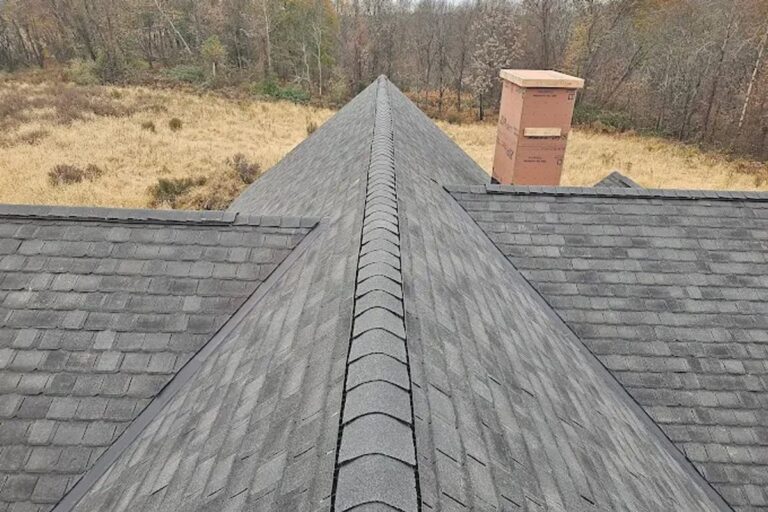
Asphalt shingles are fiberglass mats coated in asphalt and mineral granules. Metal roofs are steel or other metal panels, either with exposed screws or with hidden clips. The table lays out the differences that usually drive the decision.
| Factor | Asphalt shingles | Metal panels |
|---|---|---|
| Typical life | About 20 years (3-tab) to 30 years (architectural) | Up to 50 years or more |
| Up-front cost | Lower | Higher |
| Repairs | Replace individual shingles | Often panel or fastener work, can be specialist |
| Snow behavior | Snow stays and melts in place | Snow can slide off in sheets |
| Hail | Impact classes UL 2218 Class 1 to 4 | Heavier gauge resists better; Class 4 panels exist |
| Sun reflectance | Mostly low, higher for light “cool” shingles | Light finishes reflect strongly |
The lifespan figures come from two sources. Owens Corning, a shingle manufacturer, cites InterNACHI estimates of 20 years for three-tab and 30 years for architectural shingles. The Pacific Northwest National Laboratory’s Building America Solution Center, a U.S. Department of Energy resource, says a metal roof can last up to 50 years or more. Real life depends on ventilation, installation quality and weather exposure.
How much more does metal cost, and does it pay back?
Metal costs noticeably more at the start, and the resale payback is lower in national data. The 2025 Cost vs. Value report from Remodeling magazine, published by the Journal of Light Construction, lists a national average job cost of $31,871 for asphalt shingle replacement and $51,865 for metal. It estimates that resale value recouped 68 percent of the asphalt job and 50 percent of the metal job.
Treat those as national figures for a defined sample project, not a Hidalgo quote and not a prediction for your house. Roof size, pitch, number of valleys, tear-off layers and deck repairs move a real price a long way in either direction.
The more useful question is cost per year of service. A metal roof that really lasts 50 years can beat two shingle roofs on paper, but only if you stay in the house long enough to collect the benefit and the panels are installed with correct underlayment and fasteners. If you may sell in ten years, the resale figure matters more than the lifetime figure.
Which one handles snow, ice and wind in Morris County?
Both can handle New Jersey weather when built correctly, but they behave differently. Snow clings to shingles and melts slowly, while it can release from smooth metal all at once, so the area under the eaves, walkways and doorways needs thought. The PNNL guide notes that snow guards can keep falling snow away from entrances and also warns about possible roof overloading where snow guards are installed.
The state’s cold-season storms are the bigger factor. The NOAA-backed 2025 State Climate Summary for New Jersey describes nor’easters as coastal storms that can bring heavy snow, sleet or freezing rain, strong winds and flooding, and says high-elevation northwestern areas average close to 30 inches of snow a year. Morris County sits in that colder northwest part of the state.
Under either material, water that backs up at the eaves is the real enemy. Building guidance in the same PNNL material calls for an ice barrier running from the lowest roof edge to at least 24 inches inside the exterior wall line. Our guide on how much snow a roof can hold covers the weight side of winter in more detail.
For wind, shingle packaging carries wind-resistance classes under test standards such as ASTM D3161 and D7158, and a fastener count that goes up in high-wind zones. Metal panels depend on clip and screw spacing set by the panel maker. In both cases the installation instructions matter more than the brochure.
Will a metal roof lower your cooling bill in New Jersey?
Usually a little, and less in a cold-winter state than in the South. A cool roof reflects more sunlight and keeps the attic cooler in summer, but it also gives up some free winter heat. PNNL’s cool roof guidance says savings are largest in hot climates and that the heating penalty cuts the benefit as winters get colder. A Florida utility study it cites found white shingles instead of dark ones cut cooling use by about 4 percent.
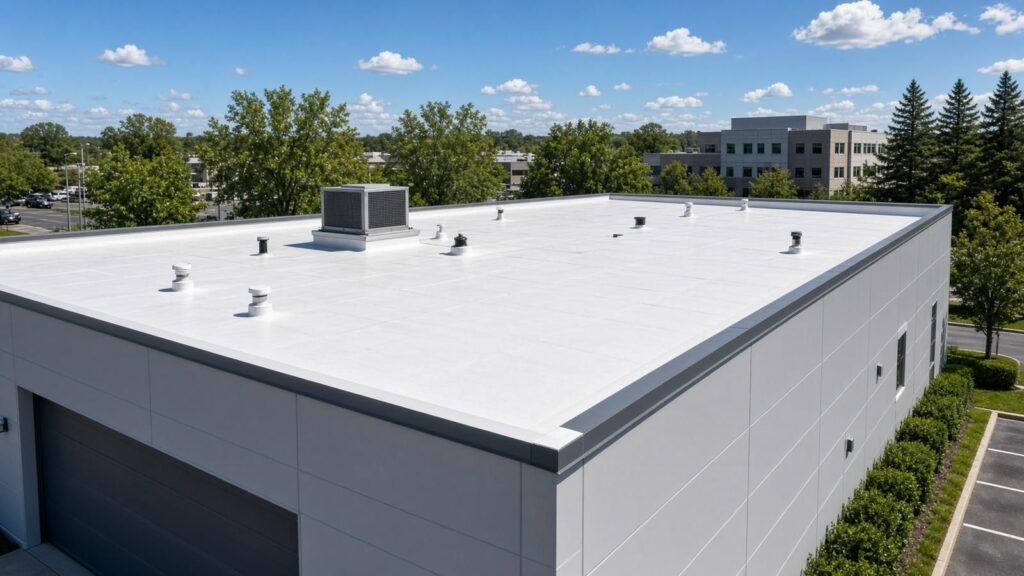
Reflectance is where metal stands out. The same guide lists three-year aged Solar Reflectance Index values of about 20 to 35 for cool asphalt shingles and 85 to 90 for white metal. Dark metal can still exceed 30. You can read the details in the PNNL cool roofs resource guide.
If energy savings are your main reason for switching, an attic with good air sealing, insulation and balanced ventilation will often do more than the roof color. Ask for the attic to be looked at before you spend extra on reflectance.
What are the downsides nobody mentions up front?
Each material has a weak spot you should plan for.
- Shingles: granule loss, curling and cracked sealant strips as they age, plus algae streaks in humid shade. Individual repairs are cheap and simple.
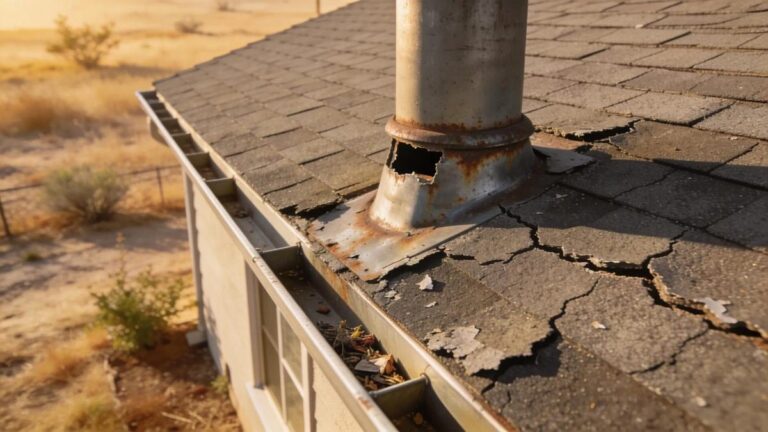
- Metal: exposed-fastener screws and gaskets need attention over time, panels can dent from heavy hail, and a repair may require matching a discontinued panel profile or paint.
- Both: neither survives a poor deck. Soft or rotted sheathing has to be replaced first, which is why a written estimate should say what happens if the deck is bad.
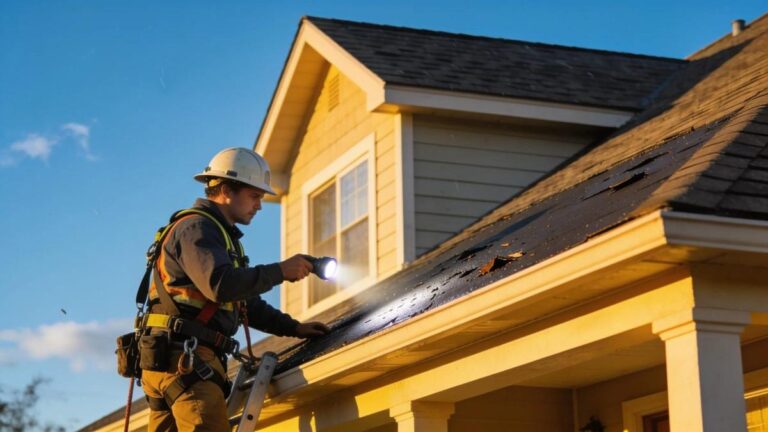
Standing seam metal panels also need a solid, sheathed deck, according to the PNNL guide, rather than strapping or battens. That is another reason to open the old roof and see what you have before you lock in a material.
How do you decide between them?
Work through these questions in order. Stop at the first one that settles it.
- How long will you own the house? Under 10 to 15 years usually points to shingles.
- What is the realistic budget, including deck repair and tear-off? If metal strains it, shingles done well beat metal done cheaply.
- Does the roof have many valleys, dormers and penetrations? Complex roofs add labor to either material and more flashing points.
- How does the neighborhood or the house style look with each? Check any homeowners association rules first.
- Who will repair it in 15 years? Shingle repair is widely available; ask who services metal where you live.
If you are still undecided, a written estimate for each option lets you compare real numbers. You can request one on the free estimate page. For the shingle side, the guide to architectural shingles versus 3-tab explains the grades, and our roof replacement page covers how a replacement project runs from tear-off to cleanup. If you lean toward metal, the longer look at whether metal roofing is worth it in New Jersey goes through the trade-offs.
What should a roofer put in writing for either material?
Whichever material you choose, ask for the same items in the estimate so the quotes are comparable:
- The tear-off scope and what happens to the old layers.
- The underlayment type and where an ice barrier goes.
- Flashing at walls, chimneys, valleys and vents, and whether old flashing is reused.
- Ventilation: intake at the soffit, exhaust at the ridge.
- The fastener type and count, matched to the manufacturer’s instructions.
- How deck damage is priced if it turns up after tear-off.
Hidalgo Brothers gives free, written, no-pressure estimates for residential roofing in Morris County and the surrounding counties it serves, and installs to code and manufacturer specifications. Bring the questions above and compare the answers.
Frequently asked questions
Is metal roofing worth the extra cost in New Jersey?
It can be if you plan to stay in the house for decades and want low upkeep. National resale data from the 2025 Cost vs. Value report shows metal recouping a smaller share of its cost at sale than shingles. If you may move within ten years, the longer lifespan may never pay you back.
Do metal roofs make more noise in rain?
Sound depends on the deck, underlayment and attic insulation under the panels more than on the metal itself. A solid deck with proper underlayment and attic insulation generally reduces drumming. Ask any installer how they handle sound before choosing, since results vary from house to house.
Can a metal roof go over old shingles?
Some jurisdictions and panel makers allow it, others do not, and it hides the condition of the deck. Standing seam systems often need a solid substrate. Because trapped moisture and rot stay out of sight, many contractors prefer a tear-off. Check with your municipality and the panel manufacturer.
Which lasts longer in a nor’easter, shingles or metal?
Neither wins automatically. Wind and ice damage usually start at edges, flashing and fasteners, so installation quality decides the outcome. Shingles with a high wind classification and correct nailing perform well, and metal with properly spaced clips does too. Ask for the fastening pattern in writing.
Does swapping materials change what the town needs to approve?
It can. New Jersey’s ordinary maintenance rule, N.J.A.C. 5:23-2.7, lists replacing existing roof covering on detached one- and two-family homes, but excludes work affecting structural or fire safety. A change that touches the framing or deck loads may need approval. Confirm with your town’s construction office before work starts.
Are asphalt shingles or metal better for resale?
Buyers care most about condition and curb appeal. National data shows the shingle replacement recouping a larger percentage of its cost at sale than metal, but a clean, well-made roof of either type reads as a plus. A mismatch with the neighborhood style can hurt more than the material choice.
Sources and further reading
- Owens Corning: 3 Signs That It’s Time to Replace Your Roof (accessed 2026-11)
- PNNL Building America Solution Center: Metal Roofs (accessed 2026-11)
- PNNL Building America Solution Center: Asphalt Shingle Roofs (accessed 2026-11)
- PNNL Building America Solution Center: Cool Roofs and Walls to Reduce Heat Gain (accessed 2026-11)
- Journal of Light Construction: Cost vs. Value 2025 (accessed 2026-11)
- NOAA NCICS: 2025 State Climate Summary for New Jersey (accessed 2026-11)
- Cornell LII: N.J.A.C. 5:23-2.7, Ordinary maintenance (accessed 2026-11)