Architectural vs 3-Tab Shingles: Which Is Right for a New Jersey Roof?
What is the difference between architectural and 3-tab shingles?
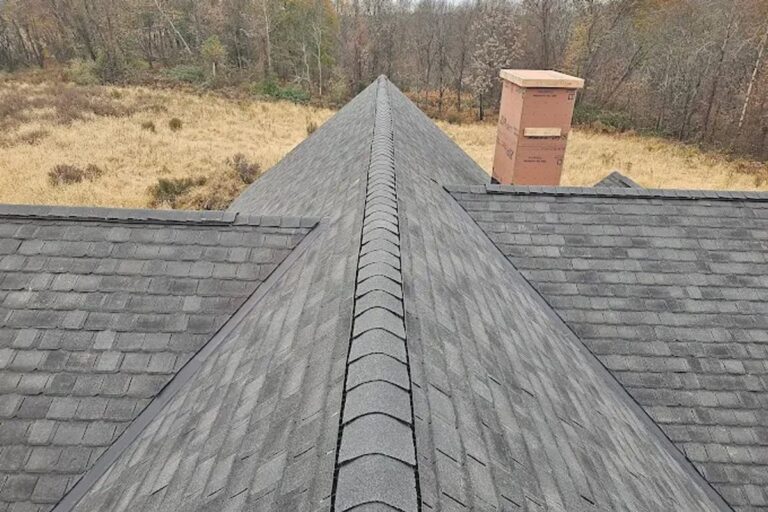
Three-tab shingles are single-layer strips cut into three flat tabs, giving a uniform look. Architectural shingles, also called laminated or dimensional shingles, bond more than one layer together, which adds thickness, depth and usually a longer service life. Architectural shingles typically cost more and are the common upgrade.
The Asphalt Roofing Manufacturers Association (ARMA) groups both under asphalt shingles and describes them as strip shingles, which are one-piece, and laminated shingles, which are multi-layer. ARMA’s FAQ page puts it simply: a laminated shingle has more than one layer of tabs to create extra thickness. The rest of this guide covers what that extra layer changes on a roof in Morris County.
How are the two shingle types built?
ARMA’s Residential Asphalt Roofing Manual lists typical shingle specifications in its first chapter. Strip shingles may have cutouts along the long edge, and those cutouts separate the tabs that give a three-tab roof its repeating look. The manual’s table shows a typical square-tab strip shingle at roughly 48 to 81 shingles per square and three to four bundles per square, while laminated shingles run about 64 to 90 shingles per square and three to five bundles. A square is 100 square feet of roof.
In practice that means a laminated shingle is thicker, with a second layer bonded on top. ARMA says the layering and tab shapes can be combined in various ways to create textures that resemble tile, wood or slate, while a three-tab roof reads as a flat, even pattern.
Installation differs a little too. ARMA shows different nail placements for three-tab and laminated shingles, and it tells installers to follow the manufacturer’s instructions for the exact number and location of nails on laminated products. Hand sealing, when needed, uses two quarter-sized dabs of cement under each tab on a three-tab shingle and four spots on a laminated one.
How long does each type last?
Published numbers vary, and they describe averages, not a promise for your roof. This Old House says three-tab shingles have a life span of about 20 years and architectural shingles can last up to 50. Thumbtack’s comparison, updated in July 2026, puts it at around 20 years for 3-tab and around 30 for architectural. Neither source ties its figure to a test, so read both as rough averages.
| Factor | 3-tab shingles | Architectural shingles |
|---|---|---|
| Construction | Single layer with cutout tabs | Laminated, multi-layer |
| Typical life (This Old House) | About 20 years | Up to 50 years |
| Typical life (Thumbtack, 2026) | Around 20 years | Around 30 years |
| Appearance | Flat, uniform tabs | Textured, multi-dimensional |
| Wind and impact resistance | Standard | Usually higher, by product |
| Cost | Lower | Higher material and installation cost |
ARMA does not publish a lifespan figure for either type. It does say that a residential roof more than 20 years old is a prime candidate for reroofing, and that proper attic ventilation extends the service life of roofing materials. Those two facts matter as much as the shingle you pick, because a poorly vented roof can wear out early whichever type it wears.
What do shingle wind ratings really mean?
Wind performance is one of the main reasons people choose architectural shingles, so it helps to know what the numbers represent. ARMA’s manual says most manufacturers certify asphalt shingles to wind test standards through independent third-party labs. Most shingles with factory sealant must comply with ASTM D7158, a test of sealed shingles under uplift force. Shingles that do not rely mainly on the sealant are qualified to ASTM D3161, a fan-induced test.
The package label shows the test method and the rating the shingle met. ARMA adds that building codes require installation to follow the manufacturer’s instructions and that recent field studies show installation is a critical component of performance. In other words, a high rating on the wrapper does not help a roof if nailing or sealing is wrong.
Product claims differ by line. For example, CertainTeed’s Landmark product page lists a 15-year warranty for 110 mph wind resistance, with an upgrade available for 160 mph, and requires its starter and hip and ridge products to qualify. That is one product’s warranty terms, not a rule for all architectural shingles. Compare the wind rating, the test standard and the warranty conditions for the exact shingle you are quoted.
How does a New Jersey winter affect shingle choice?
Freeze and thaw, snow, ice and wind all test a roof. A few facts from ARMA are worth keeping in mind for either type:
- Shingles seal by sun heat, so winter installation can leave shingles unsealed for a while. Our post on repairing a roof in winter explains hand sealing.
- Cold curl, the lifting of shingle edges in cold months, is a normal occurrence that corrects itself as the roof warms.
- Where icing along the eaves is expected, or the average January temperature is 25 degrees Fahrenheit or lower, ARMA says eave flashing must be installed, and it recommends self-adhering underlayment extending at least 24 inches inside the exterior wall.
None of these depends on which shingle you buy. A well-detailed roof with ice barrier at the eaves, correct flashing and balanced ventilation does more for you than a shingle upgrade on a poorly detailed one.
Which shingle is right for my roof?
Use these questions to decide:
- How long will you own the house? If you plan to sell within a few years, a lower-cost shingle may make sense. If you plan to stay, a longer-lived product spreads its cost over more years.
- What does the roof look like from the street? Architectural shingles add depth, and some homeowners also match the look of nearby homes.
- Is the roof exposed? Open ridgelines and wind-prone sites favor shingles with higher tested wind ratings.
- What shape is the deck in? Whatever you choose, your roofer should look at the deck and framing during the estimate, since nails cannot hold in deteriorated sheathing.
- What is the full roof system? Underlayment, flashing, ventilation and ice barrier matter as much as the top layer.
Our roof installation page and our roof replacement page explain how a new roof is planned, from the written estimate to cleanup and a walkthrough. A shingle choice is easier once the roof’s age, condition and detail work are known.
What should I ask before I choose?
Ask each contractor to name the exact shingle product, the wind rating and test standard on its label, and the warranty conditions that apply. Ask what underlayment, ice barrier and flashing go with it, and who handles ventilation. Homeowners in Parsippany-Troy Hills and across Morris County can bring the same list to every estimate, so the quotes compare on equal terms.
A shingle is one part of a roof system. Weigh the whole package, not only the top layer.
Frequently asked questions
Are architectural shingles worth the extra cost?
Often, if you plan to keep the house. Published sources put architectural shingles at about 30 years and up to 50, against roughly 20 for 3-tab, and they usually carry higher wind and impact ratings. If you are selling soon, the extra cost may not pay back for you.
How long do 3-tab shingles last?
This Old House and Thumbtack both put 3-tab shingles at around 20 years. Real life depends on ventilation, sun exposure, storms and installation quality. ARMA says a roof over 20 years old is a prime candidate for reroofing, so plan for replacement as the roof approaches that age.
Can I repair a 3-tab roof with architectural shingles?
The two have different thickness, tab shapes, nail placement and hand-sealing patterns, so a patch will usually look different and needs care to blend. Repairs are normally matched to the existing shingle where possible. A roof near the end of its life is often better replaced as a whole.
Do architectural shingles handle New Jersey winters better?
Both types face the same freeze and thaw cycle. Architectural shingles are usually rated for higher wind, but winter durability depends on correct underlayment, ice barrier at the eaves, ventilation and good sealing. The detailing matters more than the shingle type alone.
What does the wind rating on a shingle wrapper mean?
It tells you the test method, such as ASTM D7158 or D3161, and the performance class the shingle met in third-party testing. Warranty wind coverage may add conditions about starter strips and installation. Ask your roofer to show you the wrapper and the warranty terms for the product quoted.
Sources and further reading
- ARMA: Residential Asphalt Roofing Manual, Design and Application Methods, 2014 (accessed 2026-10)
- ARMA: Frequently asked questions (accessed 2026-10)
- This Old House: Types of Roof Shingles (accessed 2026-10)
- Thumbtack: Architectural vs. 3-tab shingles, updated July 2026 (accessed 2026-10)
- CertainTeed: Landmark shingles (accessed 2026-10)