Upgrade Your Home’s Curb Appeal With Professional Siding Installation
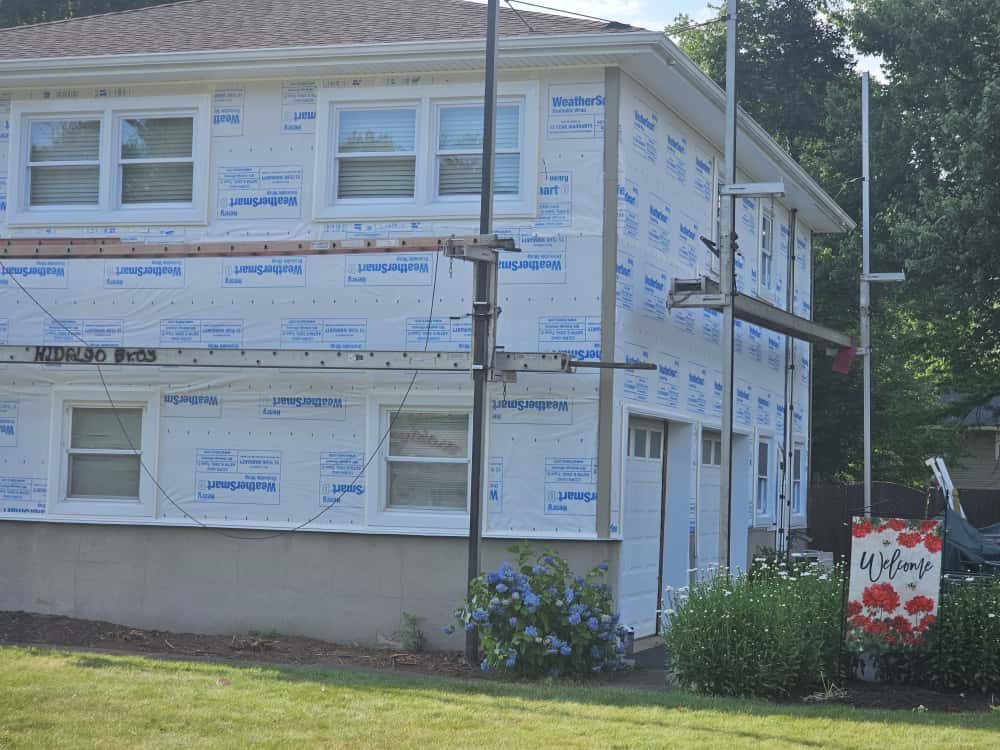
What makes new siding change how a house looks from the street?
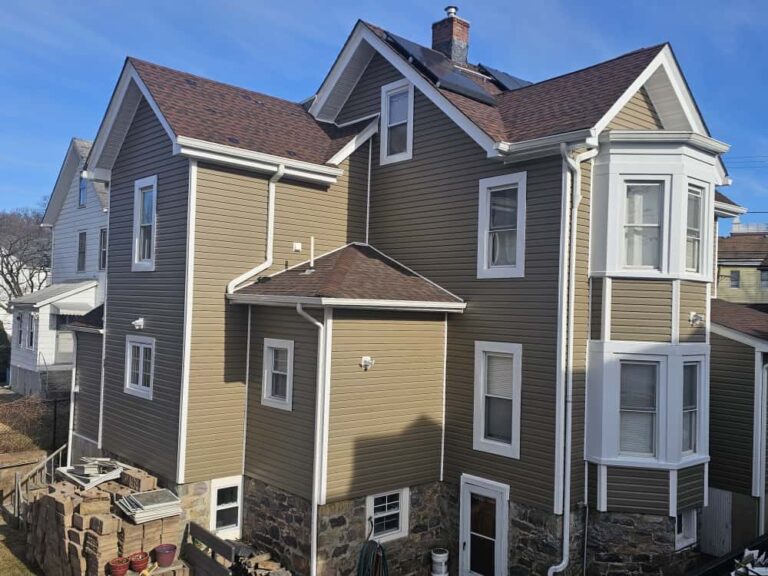
Four things do most of the work: the profile, the color, the trim and the straightness of the installation. Profile sets the texture and shadow lines. Color sets the mood. Trim frames windows and doors. Straight courses and tight corners tell the eye the job was done carefully. Get all four right and the house reads as new.
Material matters mostly through what it can do. Some products hold a crisp edge and deep shadow, others offer a flatter, uniform face. The choice also decides how often you will repaint, clean or replace pieces, so appearance and upkeep should be weighed together.
If you are still choosing a material, our installation-level comparison of fiber cement and vinyl shows what each asks of the crew. This guide stays on the visible result.
Which siding profiles change the look of a house?
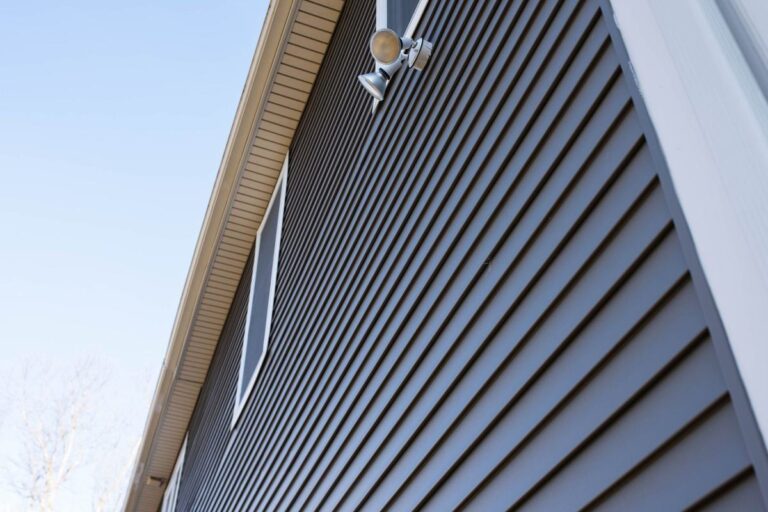
Profile is the shape of each board or panel. It controls how light and shadow fall across the wall, which is why two houses in the same color can look completely different.
- Horizontal lap is the familiar clapboard look. It suits most homes and reads as classic.
- Shake or shingle profiles add texture and a handcrafted feel, and suit capes, colonials and cottages.
- Vertical board-and-batten adds height and a more modern or farmhouse look, and works well as an accent on gables.
- Mixed profiles, such as shakes in a gable above lap siding, add interest without changing the whole house.
At Hidalgo Brothers we install vinyl, Hardie Plank fiber cement, cedar shakes, NuCedar (a PVC cedar-look product) and Everlast composite siding. You can compare them on our siding repair and installation overview, and the cedar shakes page explains the natural wood option in detail.
Match the profile to the house. A shake face on a modern box can look forced, and a flat panel on a Victorian can look bland. Walk your street and photograph the houses that appeal to you, then ask which profile each one has.
How do you choose a color that holds up?
Choose a color you can live with for ten years, then check how the product keeps it. Finishes differ by material. Some products have color built through the panel, some have a factory-applied coating, and some are painted on site.
James Hardie says the color on its ColorPlus line is factory-applied and baked on, with the finish cured between coats for consistency and adhesion. Its page also notes that paints and coatings are not covered by the product’s noncombustible rating (James Hardie: HardiePlank lap siding). Field-painted wood and fiber cement need repainting, and the U.S. Forest Products Laboratory lists paint at 7 or more years and solid-color stains at 3 to 7 years of service life (USDA Forest Products Laboratory: Paint, Stain, Varnish, or Preservative?).
Practical color tips:
- Look at samples outdoors, on your own wall, in morning and late afternoon light.
- Tape a large sample next to your roof shingles, brick and stone, since those will not change.
- Pick trim a shade lighter or darker than the body, not an exact match.
- Test a dark color against your roof edge and gutters for contrast.
- Ask the manufacturer for any color limits on the product.
Vinyl is tested for weatherability under ASTM D3679 when certified, according to PEPA (PEPA: certified vinyl siding). That standard covers weatherability among other properties, but it does not promise your color will look new in twenty years. Ask for the manufacturer’s color-retention terms in writing.
Does trim matter as much as the siding?
Yes. Trim is the frame around the picture. Crisp window and door casings, corner boards, frieze boards and gable returns make a house look finished, while thin or crooked trim makes even good siding look cheap.
Look at trim in the quote. Is it wrapped aluminum, PVC, composite or wood? Each behaves differently in sun and moisture. Cellular PVC trim is common because it resists rot, but it expands and contracts like other plastics and needs the right fasteners and joints.
Also ask what happens at the edges of the job:
- How are corners handled, and are the corner posts the same material as the siding?
- Are window and door heads flashed before trim goes on?
- What fills the gap where siding meets soffit, fascia and rakes?
- Are the vents, light blocks and electrical boxes mounted flush with the new face?
Which installation details show from the street?
Straight courses, even laps, tight corners and consistent nail lines are what a careful crew leaves behind. A wall that waves, a seam that stacks above a window or panels that sag at the bottom edge show immediately.
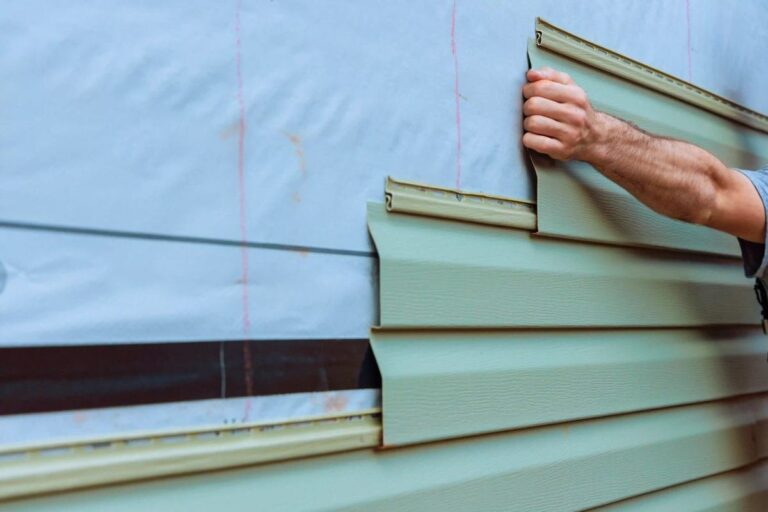
For vinyl, PEPA instructs installers to leave about 1/32 inch under the nail head, center nails in the slots, keep at least 1/4 inch clearance at openings and 3/8 inch in cold weather, and fasten at spacing of up to 16 inches on horizontal panels (PEPA installation tips). Done right, the wall stays straight through summer and winter. Done wrong, panels ripple.
For heavier boards, Bob Vila’s comparison, published in 2025 and updated in June 2026, notes that fiber cement is heavier, takes specialized tools, safety gear and skill, and needs caulking and paint if it is not pre-colored (Bob Vila: fiber cement vs vinyl). That is why finish quality varies more between crews on fiber cement.
| Detail | What good work looks like | Red flag |
|---|---|---|
| Courses | Straight, evenly spaced, level across the wall | Visible waves or stair-stepping |
| Seams | Staggered, away from eye-level focal points | Joints stacked in a column |
| Corners | Tight, plumb, same finish as siding | Gaps, crooked posts |
| Trim | Crisp lines, sealed joints, correct clearances | Open caulk lines, loose pieces |
| Penetrations | Flush blocks, sealed edges | Cut-outs with gaps |
| Cleanup | Yard clear of nails and scraps | Debris left in flower beds |
What order should exterior projects go in?
Siding is easier to plan when other exterior work is considered first. Gutters, roof edges, deck ledgers, downspouts and lighting all connect to the wall. If a roof replacement or gutter job is coming, sequence it so new siding is not drilled, scraped or splashed afterward.
Our post on vinyl siding installation cost explains line items that tend to be added when siding is planned late, such as trim, soffit and gutter detach and reset. If you want to understand when a patch makes more sense than a new exterior, read our guide on warning signs and repair options.
How do you get a clear estimate for an exterior upgrade?
Ask for the scope in writing and compare like with like. New Jersey’s Division of Consumer Affairs says home improvement contracts above $500 must be written, with the contractor’s legal name and address, start and completion dates, a description of the work, the total price and the registration number (NJ Division of Consumer Affairs). It also says contracts may be cancelled for any reason before midnight of the third business day after you receive a copy.
On permits, the published text of N.J.A.C. 5:23-2.7 treats repairing or replacing existing siding on one- and two-family dwellings as ordinary maintenance, polypropylene excluded (Cornell LII). Confirm with your local construction office.
We serve Morris County and every other New Jersey county. See the Morris County service area page or ask for a free estimate and we will walk the house with you.
Frequently asked questions
Does new siding really improve curb appeal?
It can, when profile, color, trim and installation quality are right. Fresh, straight, clean-lined siding resets how the whole house reads from the street. But new siding over worn trim, a dated roof or a neglected yard can underwhelm. Look at the full exterior and choose which pieces to upgrade together.
How do I pick a siding color that suits my neighborhood?
Walk the street and note colors you like, then look for ones that do not clash with your roof, brick or stone. Test samples on your own wall in daylight. Check any homeowner association rules before ordering. Neutral or earth tones are low-risk, while bold colors work best with strong trim contrast.
Is wood-look siding worth it compared to real cedar?
It depends on how you feel about upkeep. Real cedar shakes have natural character and need finish and moisture control. Wood-look products such as NuCedar aim for the texture with less maintenance. Look at samples side by side outdoors, and ask each maker how the color is applied and kept.
Can I change only the front of the house?
Yes, but plan the transition carefully. Ending new siding at a corner looks intentional, while stopping mid-wall looks like a patch. Match the profile exposure and align lines at the break. Some owners start with the front elevation and finish the sides later, as budget allows.
Do darker siding colors fade faster?
Dark colors absorb more sunlight and show fading more readily on many products. How much depends on the material and its finish. Ask the manufacturer for color-retention terms, and check whether the product has restrictions on dark colors. Painted wood needs repainting based on exposure, with south and west walls usually weathering faster.
How long does siding take to install?
It depends on the size of the house, the number of openings, the material and the weather. Heavier boards and detailed trim take longer. Rather than rely on a general answer, ask for start and completion dates in the contract, as New Jersey rules require, and ask what happens when weather interrupts work.
Sources and further reading
- James Hardie: HardiePlank lap siding (accessed 2026-11)
- USDA Forest Products Laboratory: Paint, Stain, Varnish, or Preservative? (accessed 2026-11)
- PEPA: Certified vinyl siding products (accessed 2026-11)
- PEPA: Vinyl siding installation tips and tricks (accessed 2026-11)
- Bob Vila: Fiber cement siding vs vinyl siding (accessed 2026-11)
- NJ Division of Consumer Affairs: Hiring home improvement contractors (accessed 2026-11)
- Cornell LII: N.J.A.C. 5:23-2.7 Ordinary maintenance (accessed 2026-11)