How Siding Affects Home Insulation and Energy Bills
Does siding make a house warmer in winter and cooler in summer?
Standard siding barely changes the temperature inside. Its job is to shed rain and shield the wall from sun and wind. Insulated siding, which has a foam layer attached, can slow heat flow a bit more, and sealing air leaks usually matters more than either. Think of siding as one layer in a wall, not the whole thermal system.
That does not make the siding choice irrelevant. The product you hang, and how carefully it goes up over the wall, affects whether the wall behind it stays dry and tight. Wet insulation loses much of its value, so a siding job that protects the wall also protects the insulation inside it.
If you are comparing materials for appearance and upkeep first, see our fiber cement versus vinyl installation guide. This article stays on heat, air and energy.
What is thermal bridging, and why does siding come into it?
Thermal bridging is heat traveling through the wood studs instead of the insulation between them. Wood conducts heat better than fiberglass or foam, so every stud acts as a small shortcut through the wall. A continuous layer outside the framing interrupts those shortcuts.
The U.S. Department of Energy’s Building Science Education Center describes insulated siding as vinyl siding with rigid foam, usually expanded polystyrene (EPS), permanently attached. It notes that the foam reduces heat loss through the studs and adds to the wall’s overall R-value where it covers the wall (DOE BSESC: insulated siding provides continuous insulation). R-value measures resistance to heat flow, and higher numbers resist more.
Plain vinyl, fiber cement and wood siding do not form a continuous insulating layer. They can sit over foam sheathing, but that foam is a separate product with its own cost and installation details.
How is insulated siding built and tested?
It is a siding panel bonded to a foam backer, and its R-value should come from lab testing, not a sales brochure. PEPA explains that claimed R-values are governed by Federal Trade Commission rules and must come from approved testing. The guide centers on the ASTM C1363 hot box method, with ASTM D7793 setting the sample setups and installation details used in those tests (PEPA: insulated siding as home insulation).
That gives you a practical question for any quote: what is the tested R-value of this exact product, and which standard produced it? A label that gives no test standard is a marketing figure.
PEPA also notes the 2012 and 2015 versions of the International Energy Conservation Code list insulated siding as a way to help meet total wall R-value in the coldest climate zones, and that ENERGY STAR Qualified Homes version 3 added it as a product that reduces thermal bridging. Those are references to how the material is recognized, not a promise of a specific bill reduction in your home.
What should come first: air sealing, attic insulation or new siding?
Air sealing comes first. ENERGY STAR’s guide to adding attic insulation tells homeowners to air-seal the attic and basement before checking insulation levels, and names R-38, roughly 10 to 14 inches depending on the material, as the recommended level for most attics (ENERGY STAR: adding attic insulation). Leaky attics and basements move more air than a wall of siding ever could.
A sensible order for most older houses looks like this:
- Seal air leaks in the attic floor, around chimneys and at the basement sill.
- Bring attic insulation to a recommended level.
- Fix moisture and drainage problems at the roof edge and gutters.
- Replace failing siding, and decide whether to add a continuous foam layer.
Keeping gutters working matters because splashed water and overflow soak the lower courses of siding and the wall behind them. Our post on where downspouts should drain in New Jersey covers the part of this that people skip.
How much can sealing and insulating really save?
ENERGY STAR says sealing and insulating can provide up to a 10 percent savings on annual energy bills (ENERGY STAR: seal and insulate). That figure covers air sealing and insulation work as a package, not new siding alone, and “up to” is the key phrase. A drafty house with thin attic insulation gains the most. A tight, well-insulated house gains little.
Be careful with any contractor, including us, who attaches a percentage to siding by itself. The savings depend on your walls, your attic, your windows, your heating system and how you live. A written estimate for siding should state scope and price, not promise a utility bill.
Which siding choices change energy performance?
The choice that moves performance is whether a continuous insulating layer is added, not which face material you pick. The comparison below is about what each option does for heat flow.
| Option | What it adds for energy | Watch for |
|---|---|---|
| Standard vinyl | Weather layer only | Loose or damaged panels let wind-driven air reach the wall |
| Insulated vinyl (foam-backed) | Continuous foam over studs | Ask for tested R-value and standard; trim details need care |
| Fiber cement over foam sheathing | Foam sheathing adds the insulation | Sheathing thickness changes trim depth and fastening |
| Cedar or cedar-look siding | Weather layer only | Wood needs moisture control and refinishing |
| Any siding with a better barrier | Fewer drafts through gaps and seams | Needs careful tape, flashing and sealing at openings |
If you are leaning toward foam-backed vinyl, our vinyl siding page explains what we install, and the vinyl installation cost guide covers what drives price.
What does New Jersey’s energy code say about this?
New Jersey adopted the 2021 International Energy Conservation Code for low-rise residential buildings, with an effective date of September 6, 2022, according to the Department of Community Affairs rule adoption notice (NJ DCA: 2021 code adoption). In the same record, the Department cites a U.S. DOE estimate of national residential energy savings of 8 to 14 percent from the 2021 IECC compared with earlier editions.
Those figures describe new construction and code-compliant work. Your existing home was built to an earlier standard, and re-siding on its own does not bring walls up to current code. Ask your town’s construction official whether your specific project, especially if walls are opened or sheathing is replaced, triggers any energy requirements.
Permit rules for siding itself are separate. The published text of N.J.A.C. 5:23-2.7 treats repair or replacement of existing siding on one- and two-family dwellings as ordinary maintenance, with polypropylene siding excluded (Cornell LII: N.J.A.C. 5:23-2.7). Confirm with your local official before work.
What mistakes cancel out the benefit of better siding?
Most losses come from small details. Watch for these.
- Gaps at windows, doors and utility penetrations left unsealed behind the siding.
- Foam panels installed without matching starter strips, corners and trim that fit the added depth.
- Wet or damaged sheathing covered up instead of repaired.
- Trim and corner details that let wind-driven rain slip behind foam.
- A new layer over a wall that still has missing or crushed insulation in the cavity.
Homeowners in Morris County face the same freeze and thaw swings as the rest of New Jersey, so details that hold up in all seasons matter. Our Morris County service area page lists the towns we work in, and you can request a free estimate to have a specific wall evaluated.
Frequently asked questions
Is insulated vinyl siding the same as house insulation?
No. Insulated vinyl has a foam layer bonded to the back of the panel, which adds a thin continuous layer over the studs. It does not replace insulation in the wall cavity or the attic. Treat it as a supplement that reduces heat loss through framing, not a substitute for proper attic and wall insulation.
Will new siding lower my heating bill?
It might, if the new job also reduces air leakage or adds a continuous foam layer. Siding by itself mostly changes protection and appearance. ENERGY STAR attributes savings of up to 10 percent to sealing and insulating together. Your own savings depend on how leaky and under-insulated the house is today.
What does R-value mean on a siding label?
R-value is a measure of how well a material resists heat flow. Higher is better. For insulated siding it should come from lab testing, typically ASTM C1363, using sample setups described in ASTM D7793. If a label gives a number but no test standard, ask the maker or installer for the test data.
Should I fix the attic before replacing the siding?
Usually yes, if the attic is leaky or thinly insulated. ENERGY STAR advises sealing leaks before adding insulation and recommends R-38 for most attics. That work typically delivers more comfort per dollar than siding alone. If the siding is already failing, you can plan both projects in sequence.
Does siding color affect how hot the house gets?
Darker colors absorb more sunlight, which warms the surface of the wall. How much that matters inside depends on wall insulation, shade and air leakage, so color is a minor lever compared with sealing and insulating. Ask the manufacturer for any color limits on the product you are considering.
Does foam-backed siding change how it is installed?
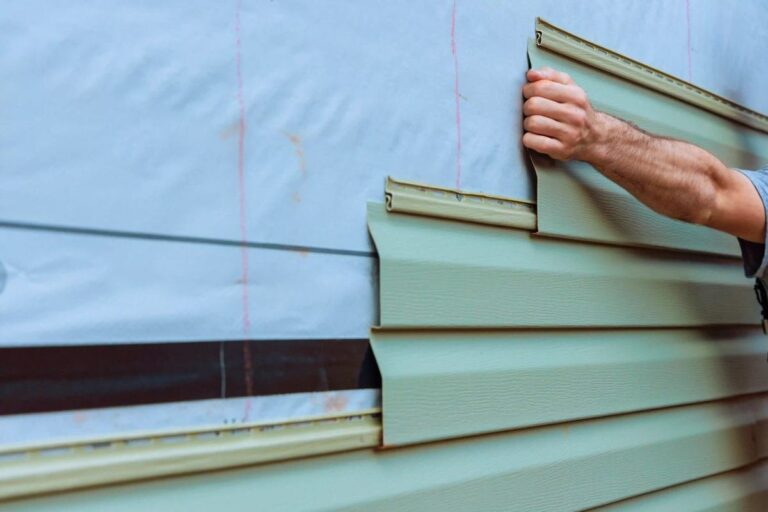
Yes. The added thickness changes trim depth, corner pieces and starter strips, and the panels still need room to move. Installers should follow the maker’s instructions for fasteners and clearances. The same loose-nail rule applies as for plain vinyl, which PEPA describes as leaving about 1/32 inch under the nail head.
Sources and further reading
- DOE Building Science Education Center: Insulated siding provides continuous insulation (accessed 2026-11)
- PEPA: Insulated siding as home insulation guide (accessed 2026-11)
- ENERGY STAR: Adding attic insulation (accessed 2026-11)
- ENERGY STAR: Seal and insulate with ENERGY STAR (accessed 2026-11)
- NJ DCA: 2021 model code adoption, including the energy subcode (accessed 2026-11)
- Cornell LII: N.J.A.C. 5:23-2.7 Ordinary maintenance (accessed 2026-11)
- PEPA: Vinyl siding installation tips and tricks (accessed 2026-11)