Where Should Downspouts Drain? Extensions, Splash Blocks & Underground Drains for NJ Homes
How far from the house should a downspout discharge?
A downspout should carry roof water at least 5 feet from the foundation onto ground that slopes away from the house. If the water goes into a buried pipe, the outlet should sit at least 10 feet out. Those are the figures the U.S. Department of Energy’s building science guidance gives for homes with gutters.
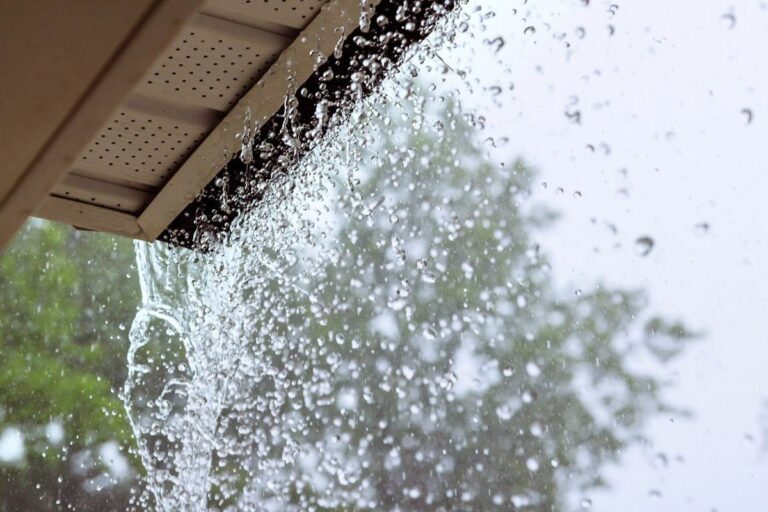
The distance matters because a roof sheds a lot of water. The Department of Energy notes that a few inches of rain on a roof can produce several thousand gallons of runoff. A downspout that ends at the corner of the house puts all of it in one spot against the foundation wall. Repeated over years of storms, that concentrated flow is how wet basements, settled backfill and heaved walkways begin.
Gutters only move water to the downspout. What happens in the last few feet is what keeps it out of your basement, and that last stretch is what this guide covers.
What are the four ways to move downspout water away from a foundation?
There are four common methods: a surface extension, a splash block, an underground drain pipe, and a disconnect that feeds a planted area. Each fits a different yard. The comparison table sorts them by where they work and where they fail, and the sections after it explain how each one is set up.
| Method | Typical discharge point | Works well when | Watch out for |
|---|---|---|---|
| Surface extension (flexible or rigid) | 5 feet or more from the wall | Yard slopes away from the house | Gets in the way of mowing; kinked or crushed pipe |
| Splash block | Only a few feet | Paired with an extension, not alone | Water pools if the grade is flat or tilts back toward the house |
| Underground drain pipe | 10 feet or more from the wall | Little room for surface runs, or you want a clear lawn | Clogs, crushed lines, a wrong outlet |
| Disconnect to a rain garden or lawn area | Planted area away from the foundation | Soil that drains and room to spare | Needs a setback from the house and any septic field |
Are splash blocks and extensions enough?
A splash block is a small trough that spreads water at the base of a downspout. On its own it only slows the water, so it works as the last piece of an extension, not as the whole plan. Consumer Reports, in its 2010 gutter testing report, put the baseline plainly: drains should extend 5 feet from the house, and the ground near the foundation should slope at least 1 inch per foot for 6 feet or more.
An extension is the simplest fix. It can be a flexible corrugated sleeve, a rigid vinyl or aluminum run, or a hinged elbow that swings up for mowing. The test for any extension is whether water leaves the end of it and keeps moving away from the house, rather than settling into a low spot near the foundation.
Two details make or break a surface extension:
- The grade under it. An extension laid across flat ground, or ground that dips toward the house, just relocates the puddle by a few feet.
- The end of the pipe. If it empties onto a walkway, a driveway edge or a neighbor’s property line, you have created a different problem. Discharge onto lawn or planting beds that can absorb the flow.
What slope should the ground have next to the foundation?
Plan on the ground falling at least half an inch per foot over the first 10 feet. The Department of Energy’s building science guidance for new homes calls for a final grade that falls at least 0.5 inch per foot over the first 10 feet from the house on all sides. ENERGY STAR’s crawlspace guide states the same target as a 5 percent slope, or a 6 inch fall over a 10 foot run.
Consumer Reports used a steeper figure for retrofits: 1 inch per foot for 6 feet or more. The two numbers are consistent in spirit. The more water you are asking the soil to shed, the more fall helps.
If you cannot reach that slope, the Department of Energy says to install swales or drains that carry water away from the foundation. ENERGY STAR mentions a surface drainage system, sometimes called a grade gutter, for the same case. A common cause of failed grade is soil that settled against the house after the original backfill, which you can see as a slight dip along the foundation after a heavy rain.
When does an underground downspout drain make sense?
An underground downspout drain makes sense when surface runs are impractical: a narrow side yard, a patio or walkway in the way, or a lot where the natural slope never gets far enough from the foundation. The Department of Energy lists a buried catchment pipe as an accepted method, with the outlet more than 10 feet from the foundation.
ENERGY STAR’s crawlspace guidance describes the destination options: a storm sewer, a retention pond, a daylight outlet where the land topography allows it, or a yard bubbler, all at a minimum of 10 feet from the foundation.
Here is how a well-built buried drain works:
- The downspout connects to a solid, non-perforated pipe that runs under the lawn.
- The pipe falls continuously downhill, so water never sits in it.
- It ends at a pop-up emitter or a daylight outlet far enough from the house, and with room for the discharge to spread out.
- Accessible clean-outs or removable caps let someone clear a clog without digging.
Call 811 before you dig, so buried utilities are marked first. Most failures of buried drains trace back to a flat run that holds water, leaves that wash into the pipe from an open gutter, or a crushed section from a vehicle or from tree roots.
Keep the downspout drain away from the foundation drain
The Department of Energy says downspout piping should not be connected to the foundation drain system. A foundation drain handles groundwater at the footing. If roof water is also sent down that line, a heavy storm can overload it, so keep the two separate.
Can you send downspout water into a rain garden or lawn instead?
Yes, if there is room and the soil drains. Rutgers Cooperative Extension of Morris County describes disconnecting rooftop runoff from storm sewers so it can infiltrate into a lawn or garden, or be captured in a rain barrel or rain garden. For a homeowner, the practical version is a downspout run out to a planted area or a dry well-like basin at a safe distance from the house.
Two cautions apply in New Jersey yards:
- Keep the planted area well away from the foundation. The 10 foot figure used for buried outlets is a sensible starting point.
- If your property has a septic system, keep roof water away from the absorption field. Ask your septic professional or town health office for the setback that applies to your lot before you route any roof water near it.
Rain barrels can help if you want to use the water, but a barrel fills fast. Plan an overflow that also lands away from the house.
What goes wrong most often with downspout drainage?
Most problems come from small details, not from the idea. These are the repeat offenders we see described in the building science guides:
- Extensions that are too short. A 2 foot run still drops water inside the zone where the soil is backfilled and loose.
- Flat or reversed grade. The pipe is long enough but the ground around it tilts toward the house.
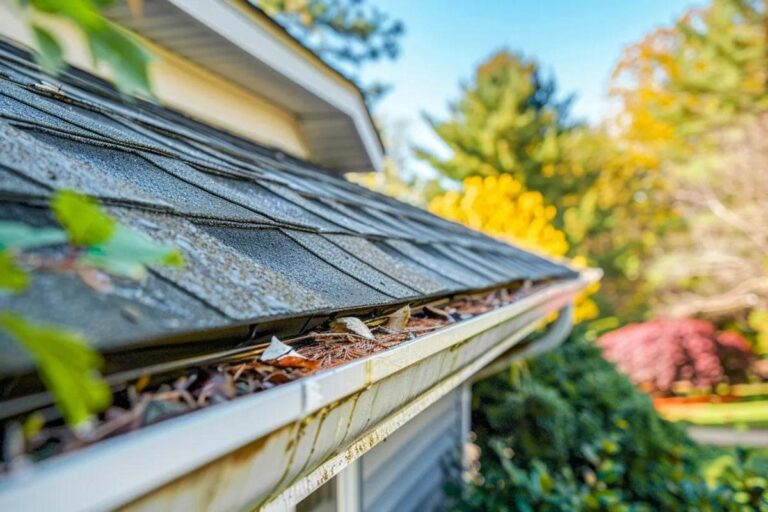
- Open gutters feeding a buried pipe. Leaves wash in and block it. Clean gutters, or protection on the gutters, reduce the load. Our post on whether gutter guards work in winter covers the tradeoffs.
- Downspouts tied into the foundation drain. See above: keep them separate.
- Discharge onto a neighbor’s lot or a public walkway. Check your town’s rules before you route water toward a property line.
A downspout problem can also look like a gutter problem. If water pours over the front edge during a storm, the gutter may be undersized, clogged or sagging. Our gutter installation and repair page explains how those failures are diagnosed.
What should you check before you choose a method?
Walk the yard during a heavy rain. It takes ten minutes, and it tells you more than any rule of thumb. Then work through this checklist:
- Does water leave each downspout and keep moving, or does it stall within a few feet?
- Is there a dip or a bare, eroded patch next to the foundation?
- Do walkways or patios tilt toward the house?
- Is there a basement or crawlspace with stains, efflorescence or a musty smell near that wall?
- Where would a 5 foot or 10 foot run end, and what is there?
- Are there buried lines, such as gas, water, electric or a septic field, in the path?
If the answers point to a drainage fix that touches the gutters themselves, a written estimate from a gutter contractor can include the downspout work. We serve homes in Ledgewood and across Morris County, and we give free, written estimates. Gutters that spill because of a leak at the roof edge are a roof repair question first.
Frequently asked questions
How far should a downspout extension go?
At least 5 feet from the foundation onto ground that slopes away, according to the Department of Energy. A buried drain should end 10 feet or more from the wall. Longer is better if the slope is gentle, as long as the water has somewhere to soak in without crossing a property line or walkway.
Do I need an underground downspout drain?
Not always. A surface extension on ground that slopes away from the house does the job in many yards. A buried drain earns its cost when a patio, walkway or tight side yard blocks a surface run, or when grading cannot move water far enough on its own.
Can I connect my downspout to the foundation drain?
The Department of Energy says downspout piping should not be connected to the foundation drain system. Heavy rain can send a lot of roof water into that line at once, and the foundation drain is there to handle groundwater at the footing.
Is a splash block enough?
Usually not by itself. A splash block spreads and slows water at the base of the downspout, but it only moves it a few feet. Pair it with an extension and a sloped grade so the water continues away from the house after it leaves the block.
Should I call 811 before burying a downspout pipe?
Yes. Any digging in the yard can hit buried gas, electric, water or communications lines, and calling 811 gets them marked before you start. This applies even to a shallow trench for drainage pipe, and a contractor will normally handle the call as part of the job.
Sources and further reading
- U.S. Department of Energy Building Science Education Solution Center: Foundation Drain, Gutters and Downspouts (accessed 2026-10)
- U.S. Department of Energy Building Science Education Solution Center: Stormwater, Gutters and Downspouts (accessed 2026-10)
- U.S. Department of Energy Building Science Education Solution Center: Final Grade Sloped Away from Home (accessed 2026-10)
- ENERGY STAR: Guide to Closing and Conditioning Ventilated Crawlspaces (accessed 2026-10)
- Consumer Reports: Gutter guards, September 2010 (archived article) (accessed 2026-10)
- Rutgers Cooperative Extension of Morris County: Disconnection of Stormwater Runoff (accessed 2026-10)