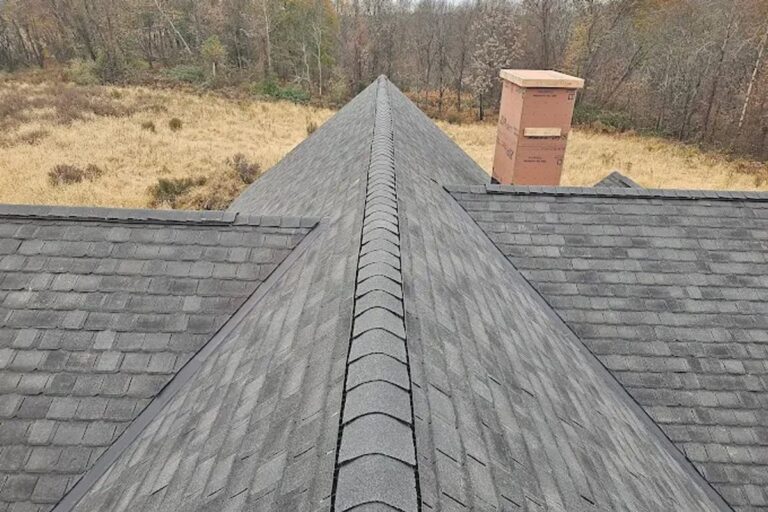
Storm-Damaged Roof in New Jersey: What to Do First, in Order
What should you do first when a storm damages your roof?
Stay off the roof, check from the ground, photograph everything, stop water entering the house, and tell your insurer. Only then arrange temporary cover and a written estimate for permanent repair. Taking the steps in that order keeps you safe and protects your ability to be reimbursed for the work.
Storms rarely break a roof neatly. A torn ridge, a lifted flashing and a limb on the deck can all appear in the same hour, and the first day’s decisions shape the repair bill for months.
How can you check for damage without going on the roof?
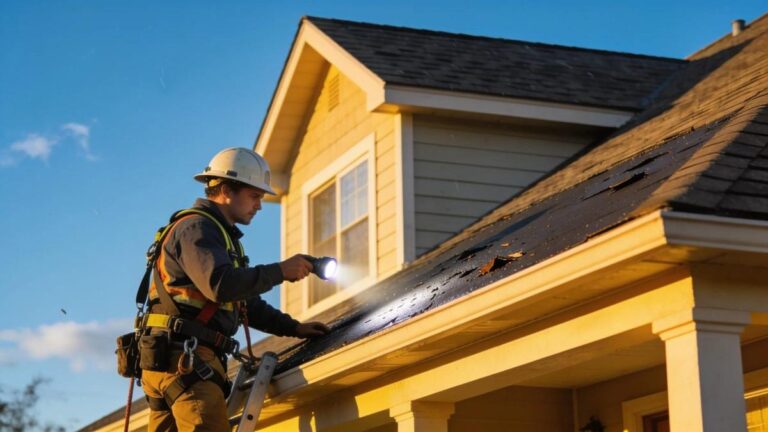
Walk the property and look up from the ground, ideally with binoculars. Stay away from downed lines and anything touching them, and call the utility or 911 instead of approaching. Wet shingles, a sloped surface and loose debris make a roof a poor place to learn what happened.
Common signs from the ground and the attic include:
- shingles, ridge caps or pieces of flashing in the yard or gutters;
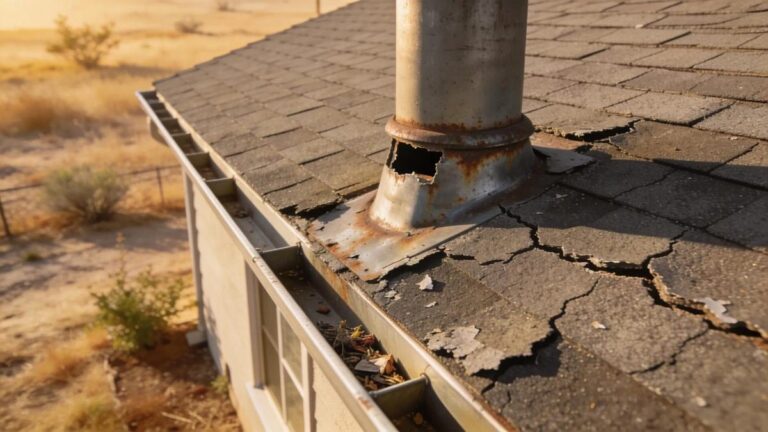
- a limb or debris lying against the roof, or a visible hole;
- a sagging line along the ridge or a soft-looking section;
- dark, wet stains on ceilings or walls that grow after rain;
- daylight visible through the attic roof deck.
If water is entering, move belongings, set out a bucket and photograph the leak. Stay out of any room where water is near electrical fixtures.
Winter and early spring bring the heaviest wind events. The National Oceanic and Atmospheric Administration notes that nor’easters are most common between September and April and can produce gusts stronger than hurricane-force winds along with heavy snow, rain and flooding.
What should you document before anything is moved?
Photograph or video the damage before cleaning up or discarding anything. The New Jersey Department of Banking and Insurance recommends taking pictures of all damaged property before disposing of it and, where possible, keeping the damaged property until the insurer inspects it or says it may be discarded.
Build a simple record:
- Wide shots of each side of the house, then close-ups of every damaged area.
- The date, time and weather conditions, written in a notebook.
- Interior photos of leaks, stains and affected belongings.
- A list of items damaged, with receipts if you have them.
- Receipts for anything you buy or pay for afterward.
The Insurance Information Institute adds that you can work from memory if you lack records, and that damaged items should be kept until the adjuster has visited.
How does the insurance step work in New Jersey?
Call your agent or insurer as soon as possible. The state’s guidance on storm-related damage claims says to have your policy number ready and to record the claim number and the name of the assigned representative. It also says you are not required to use the company’s recommended contractor.
This is general homeowner guidance, not a service we provide: Hidalgo Brothers does not handle your insurer’s process for you, but a written scope from a contractor can help you discuss the repair with your adjuster.
Key points from the state’s guidance and from the Insurance Information Institute:
- The insurer assigns an adjuster at no charge to inspect the damage and determine coverage.
- Public adjusters are licensed by the state, are paid a percentage of the settlement and are not required to file or resolve a claim.
- Standard homeowners policies do not cover flood damage. Flood coverage comes from the National Flood Insurance Program or a private flood policy, and it is not effective until 30 days after it is sold.
- If you disagree with the insurer, the Department’s Consumer Hotline is 1-800-446-7467.
Read your own policy for deductibles and exclusions; they vary, and nothing here is a statement of what your policy covers.
What counts as a reasonable temporary repair?
Temporary cover protects the house until a permanent repair is made. The state’s guidance says it is important to make any necessary temporary repairs to protect the property from further loss, and to save all receipts or bills. For a roof, that usually means securing a tarp or similar cover over the opening.
The Insurance Information Institute cautions that temporary repair costs are part of the total settlement, so a large temporary bill can leave less money for the permanent work. It also advises holding off on extensive permanent repairs until the adjuster has assessed the damage.
Treat a tarp as a short-term measure. Ask whoever installs it how it is secured and when it should be removed, and plan the permanent repair soon after. Our storm damage roof repair page explains how repair work follows the first look.
A first-48-hours table
| Situation | Immediate step | Contact | Keep a record of |
|---|---|---|---|
| Downed power line near the house | Stay back, keep others away | Utility or 911 | Time and location |
| Water coming through the ceiling | Move items, set out a bucket | Insurer, then a roofer | Photos of stains and drips |
| Shingles or flashing missing | Photograph from the ground | Insurer | Fallen pieces, if safe to collect |
| Tree limb on the roof | Stay off the roof and out of the room below | Insurer, tree service | Photos of the limb and the point of impact |
| Fresh flood water inside | Stay out of flooded rooms with live power | Insurer and flood carrier | Waterline photos |
How do you avoid storm-chaser contractors?
After a big storm, unfamiliar crews may knock on doors with offers. The New Jersey Division of Consumer Affairs lists a contractor who approaches you claiming to have been in the neighborhood and offering a deal among its warning signs. The Insurance Information Institute likewise warns about contractors who demand large upfront payments or submit unusually low bids.
Protect yourself with a few checks, all described in the Division’s hiring guide:
- Verify the registration number before anything is signed.
- Get the contract in writing if the job costs more than $500.
- Do not pay more than about a third before work starts, and never pay in cash.
- Hold the last payment until the work is complete.
The Federal Trade Commission’s advice on home improvement scams also treats up-front payment demands as a red flag.
What permits apply to storm repairs?
For a detached one- or two-family home, the New Jersey Department of Community Affairs classifies repair or replacement of any amount of roof covering as ordinary maintenance, which needs no permit, though the work must still meet code. Attached homes, structural framing repairs and deck or porch rebuilds can differ, so ask the town’s construction office. The rule is listed in the DCA ordinary maintenance table.
How can you compare options once the dust settles?
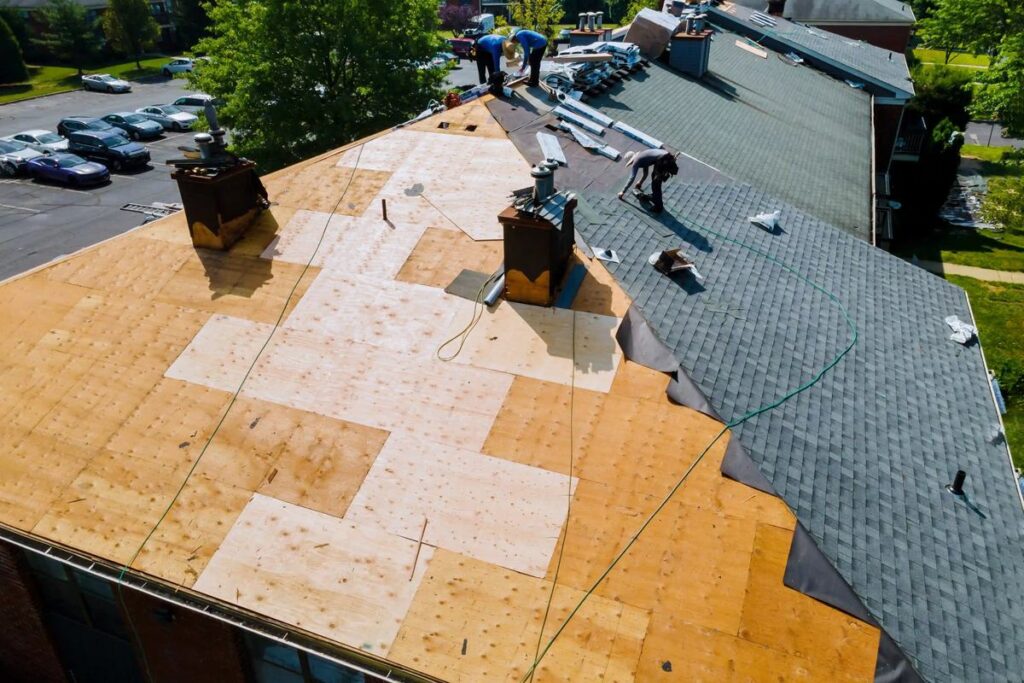
Gather a written estimate that separates the temporary cover from the permanent repair, and compare it with the adjuster’s figures. A repair may involve only shingles and flashing. If the decking is soft or the damage spreads, a replacement can make more sense; our roof repair page explains the difference.
Hidalgo Brothers gives free, written estimates for storm damage in Morris County and nearby areas; ask about scheduling when you call (973) 525-6835, or use the free estimate page. For seasonal context, read about winter roof repair limits and snow load warning signs. Town coverage is listed on the Morris County page.
Frequently asked questions
Should I get on the roof to tarp it myself?
No. Wet, damaged and sloped surfaces make falls a real risk, and the damaged section may not hold weight. Cover the interior, document what you can from the ground, and have a trained crew secure the roof, or ask your insurer about its requirements.
How soon do I have to report storm damage to my insurer?
New Jersey’s insurance department says to call your agent or insurer as soon as possible after the loss. Policies can contain their own notice requirements, so read yours.
Does homeowners insurance pay for the tarp?
Temporary repairs to protect the property from further damage are typically part of the claim, which is why the state says to save every receipt. Coverage depends on your policy and the cause of loss, so ask your insurer before you spend.
Do I have to use the contractor my insurer suggests?
No. The New Jersey Department of Banking and Insurance states that you are not required to use the company’s recommended contractor. Get your own written estimate and, if useful, let the contractor speak with the adjuster about the scope.
Is a public adjuster necessary?
No. State guidance says public adjusters are not required to file or resolve a claim. They are licensed by the state and are paid from the settlement, typically as a percentage, so weigh the cost against the help you expect.
Is flood damage covered by a standard homeowners policy?
No. New Jersey’s insurance department states that flood insurance is not part of standard homeowners policies and takes effect 30 days after purchase. Check whether you hold a separate National Flood Insurance Program or private flood policy.
Sources and further reading
- NJ Department of Banking and Insurance: Guidance on Filing Insurance Claims for Storm-Related Damage (accessed 2026-11)
- Insurance Information Institute: Settling insurance claims after a disaster (accessed 2026-11)
- NOAA NESDIS: What Is a Nor’easter? (accessed 2026-11)
- NJ Division of Consumer Affairs: Hiring Home Improvement Contractors consumer brief (accessed 2026-11)
- FTC: How To Avoid a Home Improvement Scam (accessed 2026-11)
- NJ DCA: Significant Changes to Minor Work and Ordinary Maintenance (2018) (accessed 2026-11)