DIY vs Professional Deck Repair: When Should New Jersey Homeowners Call a Pro?
Which deck repairs can a homeowner safely do?
Replacing a cracked board, driving popped fasteners, cleaning and recoating the surface are reasonable homeowner jobs when the framing underneath is sound. Anything that holds the deck up, ties it to the house or keeps people from falling is a different category and deserves a closer look first.
The deciding question is not how hard a fix looks but what it touches. A board is a surface part, and a bad one can be pulled and replaced in an afternoon. A ledger, post or stair stringer is a structural part, and the deck depends on it every time someone steps outside. Triage starts with finding out which kind of problem you actually have.
How do you test a deck before deciding?
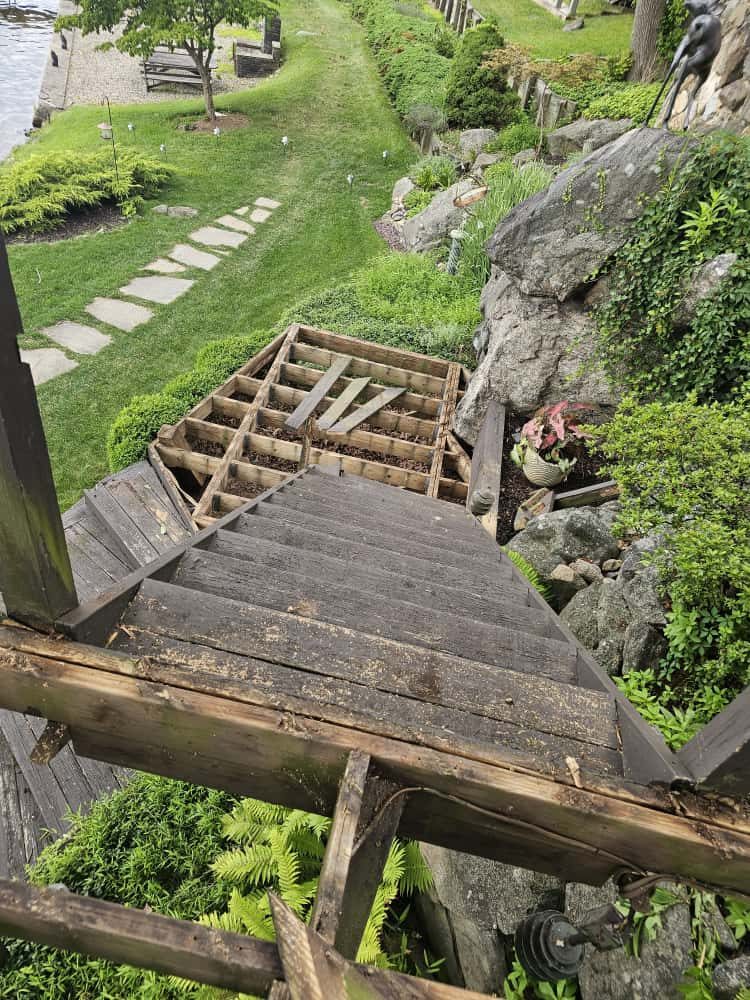
Probe the wood. The North American Deck and Railing Association’s consumer checklist tells owners to check the ledger board, support posts, joists, deck boards, railings and stairs, paying special attention to areas that stay damp or touch fasteners. If a screwdriver or ice pick penetrates 1/4 to 1/2 inch easily, or the wood is soft and spongy, decay may be present.
Do the probe test in this order, and write down what you find:
- Look under the deck at the ledger where it meets the house, and probe the wood on both sides of each bolt.
- Probe the top and bottom of every post where it sits on a footing or bracket.
- Probe joist ends and any board edges that stay wet after rain.
- Push and pull each railing post, and sight along the rail for bows.
- Step on every stair tread and shake the stringers.
NADRA’s checklist also says the deck should not sway or move when tested, and that stairs should look even without sagging. A deck that moves underfoot has a structural question that surface repairs will not answer. NADRA’s own guidance is to seek a deck builder or home inspector for an evaluation, and the checklist states that following it does not make a deck code compliant.
What is a quick triage table for deck problems?
Use the table below to sort what you find. If anything lands in the right column, treat the rest of the deck as unverified until a qualified person has looked at that area. The reasons are practical: structural parts load each other, so damage in one place often means stress in another.
| What you find | Usually DIY? | Why |
|---|---|---|
| Cracked or cupped surface board, framing sound | Yes | Surface part, easy to access |
| Popped nails or loose screws in boards | Yes | Replace with deck screws, check the joist beneath |
| Faded or peeling finish | Yes, with prep | Cleaning and recoating, see our refinishing page |
| Soft wood at a post base or joist end | No | Structural decay, cause must be found |
| Rust, gaps or rot at the ledger | No | Deck-to-house connection |
| Railing post that flexes or shifts | No | Fall protection |
| Stair stringer or tread that moves | No | Load path and fall risk |
Why is the ledger the part not to improvise on?
The ledger is the board that fastens the deck to the house, and NADRA calls it a common source of deck failure. Moisture gets trapped between house and deck, so rot and rusted fasteners often hide behind the board where you cannot see them.
The Borough of Mendham’s deck guidelines show the standard a Morris County inspector applies to a new ledger: 1/2-inch galvanized lag bolts at 16 inches on center in a staggered pattern, two bolts at each end, reaching at least 2 1/4 inches into the rim joist, with flashing along the ledger except against vinyl, metal or masonry siding. NADRA adds that a ledger should not be fastened with only nails.
Those details are why a loose ledger is not a weekend repair. Pulling a ledger exposes the house wall, requires correct flashing integration with the siding, and needs the deck temporarily supported. If you suspect ledger problems, avoid loading the deck with a crowd until it has been looked at, and keep the area under the deck clear.
Do deck repairs need a permit in New Jersey?
Cosmetic work generally does not, but structural repairs often do, and rules vary by town. Replacing posts, beams, ledgers or stairs is more likely to trigger plan review than swapping boards. Call your construction office with a short description of the work before you start, and ask in writing if you can.
Randolph Township says its Office of Construction Codes issues permits under the New Jersey Uniform Construction Code, with zoning approval as a separate step where exterior changes are involved. The Rockaway Township deck permit page is written for new decks and does not address repairs or board replacement, which is a reminder that you should ask rather than assume.
If you hire out the work, the New Jersey Division of Consumer Affairs brief on hiring contractors says unregistered home improvement contractors cannot be issued municipal construction permits, contracts over $500 must be in writing, and final inspections should be done before final payment.
What does safe DIY surface work look like?
Safe DIY work follows the manufacturer’s directions and stays on the surface. That means choosing fasteners rated for outdoor use, matching board thickness, leaving the spacing the board maker recommends, and sealing cut ends. Treat any discovery of soft framing as a reason to stop and reassess.
For recoating, our guide on staining or sealing a deck in cold weather covers temperature limits that apply to finishes, and our deck refinishing page explains what a refinishing project involves. Clean away leaves and debris first, since NADRA notes that debris is slippery and promotes mildew.
Work from stable footing as well. If the deck is high or the repair puts you on a ladder, the OSHA Portable Ladder Safety Quick Card advises inspecting the ladder before each use and keeping three points of contact while climbing. A fall from a repair job is a worse outcome than the problem you set out to fix.
What does a professional deck repair visit include?
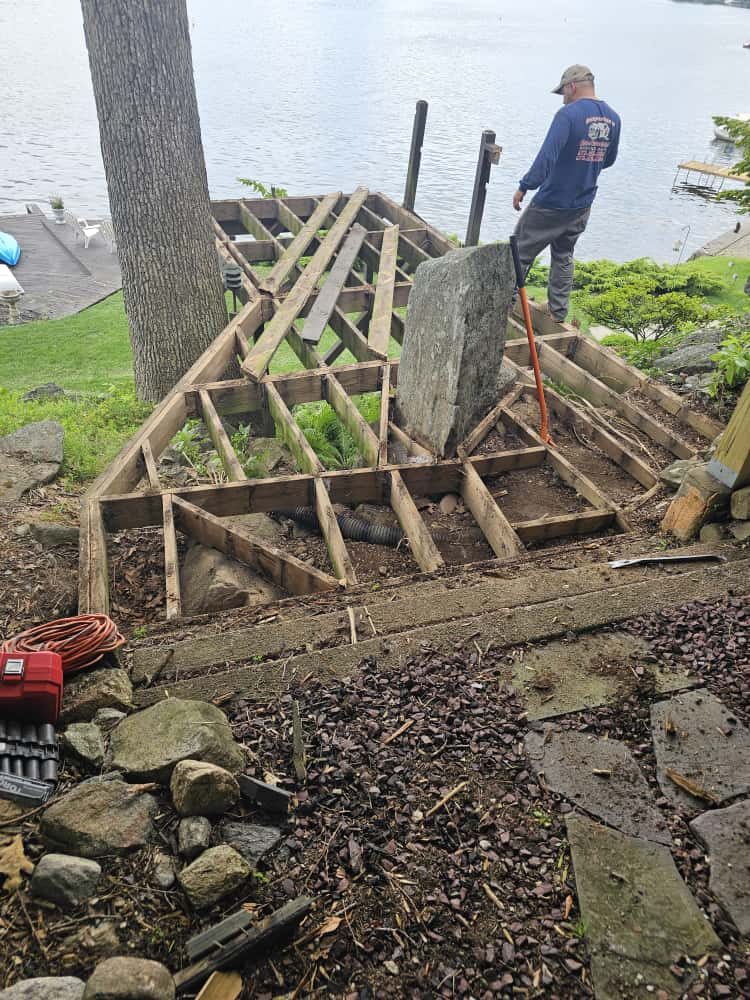
A good visit starts with an inspection of the structure and ends with a written scope. You should leave knowing which parts are sound, which are not, what the cause was and what the options are. If the cause is water, fixing the board without fixing the water only restarts the clock.
Hidalgo Brothers handles deck repairs as part of its residential deck work, and the first step is a free written estimate after an inspection. If an inspection shows the framing is too far gone, a rebuild becomes the option to compare. Our companion guide on DIY versus professional deck installation covers that route. To start, use the estimate form.
Frequently asked questions
Can I replace deck boards myself if the joists look fine?
Yes, if you probe the joists beneath and find solid wood. Use outdoor-rated screws, keep the spacing the board maker recommends and seal cut ends. If a screwdriver sinks into a joist or the board sits on soft wood, stop and have the framing checked first.
How do I know if the wood is rotted?
Press a screwdriver or ice pick into the surface. NADRA says easy penetration of 1/4 to 1/2 inch, wood that breaks off in a sliver without splintering, or a soft and spongy feel can indicate decay. Check areas that stay damp, such as post bases, joist ends and the ledger.
Is a wobbly railing a DIY fix?
Tightening a loose fastener is fine, but a post that flexes or shifts usually means the connection or the post itself has failed. Guards are fall protection, and Mendham’s guidelines require them at 36 inches high on decks more than 30 inches above grade, so have a pro look at a railing that moves.
How often should a deck be inspected?
NADRA promotes May as Deck Safety Month, which is a handy yearly reminder. Do a probe and sway test each spring, and again after severe weather. Keep a record of what you found so changes are easy to spot.
Can I use the deck while waiting for repairs?
Limit use if the deck moves, a railing is loose, or you found soft wood at the ledger, posts or stairs. Keep gatherings off the structure, restrict access to the stairs if they shift, and tell anyone who uses the deck what you found.
Sources and further reading
- NADRA: Check Your Deck consumer checklist (accessed 2026-11)
- Borough of Mendham: Residential Wood Deck Guidelines (accessed 2026-11)
- Randolph Township: Construction Permits (accessed 2026-11)
- Rockaway Township: Deck Permit (accessed 2026-11)
- NJ Division of Consumer Affairs: Hiring Home Improvement Contractors (accessed 2026-11)
- OSHA: Portable Ladder Safety Quick Card (accessed 2026-11)