Custom Deck Builders in Parsippany, NJ: What to Know Before You Build
What should a Parsippany homeowner know before hiring a deck builder?
Know three things first: a new deck needs township review, its footings must reach below frost depth, and the material you choose sets the maintenance for years. A good builder explains all three in the estimate. New Jersey has no shortcut around the Uniform Construction Code, which the Parsippany-Troy Hills Building and Construction Division enforces.
The division handles application processing, plan review, permit issuance and inspections, according to its township page. You can reach it at (973) 263-4366 at 1001 Parsippany Boulevard, with office hours Monday to Friday, 9:00 AM to 5:00 PM. Deck setbacks and coverage are a zoning question as well, so ask the township which approvals your lot needs before you sign a contract.
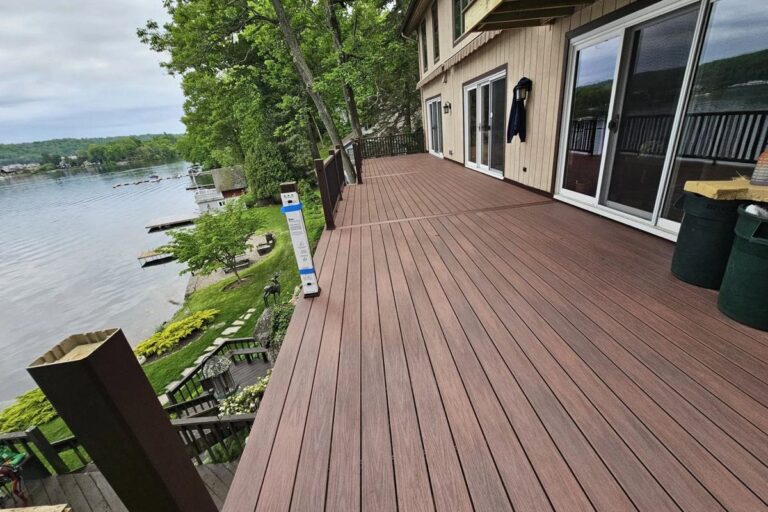
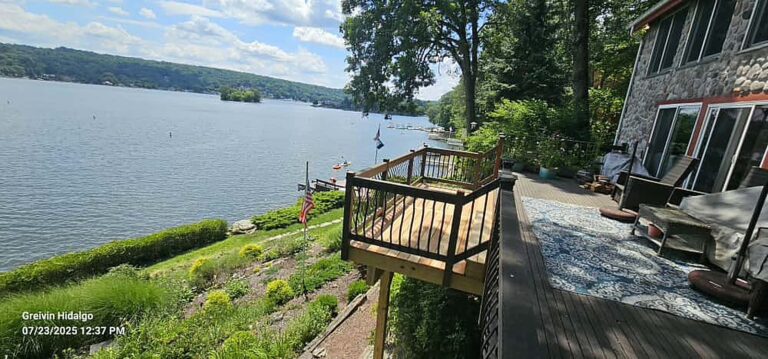
Hidalgo Brothers builds composite and wood decks and repairs and refinishes existing ones across Morris County. Our Parsippany service page lists the township we serve. This guide covers the decisions that come before any builder shows up.
How do deck permits work in Parsippany-Troy Hills?
A new deck is reviewed under the state Uniform Construction Code, and the township runs permits through an online construction permit portal. The state rule on ordinary maintenance, N.J.A.C. 5:23-2.7, lets homeowners repair or replace deck parts that do not provide structural support without a permit, but a new deck or structural change is outside that exception.
The township’s building page says its Construction Division covers five subcodes: building, electrical, plumbing, fire and elevator. A deck with lighting, a gas line or a hot tub can involve more than one. It links to the Department of Community Affairs permit forms and to a permit portal with a how-to guide. To schedule an inspection, the page tells you to call 973-263-4366.
We did not find a Parsippany deck checklist or fee table to cite, so confirm the current requirements and any zoning review with the township before you plan the footprint. Also confirm who files the application: ask any builder to put that in writing.
What do New Jersey towns usually require for deck plans and footings?
Towns apply the New Jersey edition of the International Residential Code, and published deck guidelines share a core set of requirements. Morris Township’s deck guidelines, for example, call for a plan showing footing layout, diameter and depth, with a minimum footing depth of 36 inches. Parsippany may publish different details, so treat this as an example.
| Item | Morris Township guideline (example) |
|---|---|
| Code basis | 2021 International Residential Code, NJ Edition |
| Footing depth | 36 inches minimum |
| Ledger attachment | Not permitted to cantilevered house framing |
| Ledger fasteners | 1/2-inch lag bolts as the reference, or manufacturer specifications |
| Railing height | 36 inches minimum, balusters less than 4 inches apart |
| Stair risers | 8 1/4 inches maximum, treads 9 inches minimum |
| Handrails | Graspable rail for four or more risers |
The same township asks for a detailed plan signed and sealed by a licensed architect or engineer, or a plan that states the homeowner designed the deck, and treated lumber with coated exterior fasteners. Gas lines, lighting and hot tubs need additional permits.
These details are why a deck should be designed, not improvised. A ledger that is poorly attached or a missing guard are the classic failures, and both are things an inspector looks at.
Wood or composite: which fits a Parsippany home?
Choose wood for lower first cost and a natural look if you accept recurring sealing, and composite when you want less upkeep. The decision turns on how much maintenance you will actually do, not on the sticker price alone.
| Factor | Wood (pressure-treated, cedar) | Composite |
|---|---|---|
| Upkeep | Cleaning and sealing or staining on a cycle | Washing |
| Look | Natural grain, changes with weather | Consistent color, many finishes |
| Movement | Swells and shrinks with moisture | Expands and contracts with temperature |
| Installation detail | Check moisture before install | Gaps depend on product and temperature |
Trex’s own spacing guidance shows why installation details matter on composite. It recommends a 3/16-inch gap between boards in all weather, a 1/8-inch end-to-end gap above 40 degrees Fahrenheit and 3/16 inch below, and a 1/4-inch gap where boards meet a solid object such as the house, increasing to 1/2 inch in cold weather. Installing with no gaps on a cold day can lead to buckling when boards expand in summer. Treat these as examples and follow the maker’s instructions for the product you choose.
See our pages on composite deck installation and wood deck installation. Prices vary with size, height, railings and stairs. We give free written estimates rather than a per-square-foot rate over the web.
How should a deck be built for northern New Jersey winters?
It needs footings below the frost line, drainage that keeps water away from the ledger and materials rated for freeze-thaw cycles. The Office of the New Jersey State Climatologist at Rutgers reports that annual snowfall in the northern zone averages 40 to 50 inches and that precipitation is highest in north-central parts of the state.
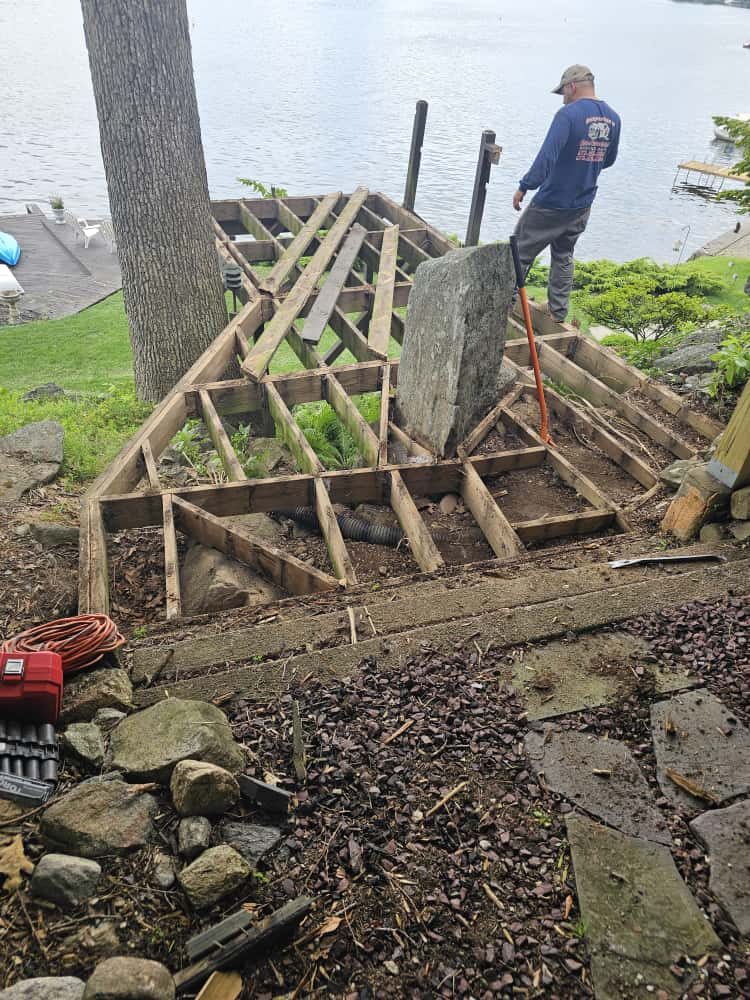
Frost heave is the issue behind the 36-inch rule. Water in soil freezes, expands and lifts shallow footings. A deck whose posts rise and settle with each winter will open gaps at the ledger and loosen rails. Digging to the required depth is slow work, but it is not a step to skip.
The ledger, where the deck meets the house, is the other water trap. It needs to be bolted through the rim joist as the plan shows and flashed so water runs outward, not behind. Snow on the deck and ice against the house make a poorly flashed ledger leak into the wall. Our post on staining or sealing a deck in fall covers seasonal finish timing for wood decks.
What should the estimate and contract include?
A written estimate should name the materials and brands, the deck size and height, the footings, the stair and rail details, the permit plan and the payment schedule. New Jersey requires a written contract for home improvement projects over $500, and a Monmouth County consumer affairs page lists what to expect in it.
Items to find in any deck contract:
- The builder’s legal name, address and NJ Home Improvement Contractor registration number.
- A description of the work and the main products.
- Total price and a payment schedule tied to progress.
- Start and completion dates.
- Who applies for the permit and schedules inspections.
- Signatures of everyone on the agreement.
You can verify any contractor by calling the NJ Division of Consumer Affairs at 1-800-242-5846. Hidalgo Brothers works under NJ Home Improvement Contractor license #13VH08024500. Ask for a free written estimate through the contact page.
Can an old deck be repaired or refinished instead?
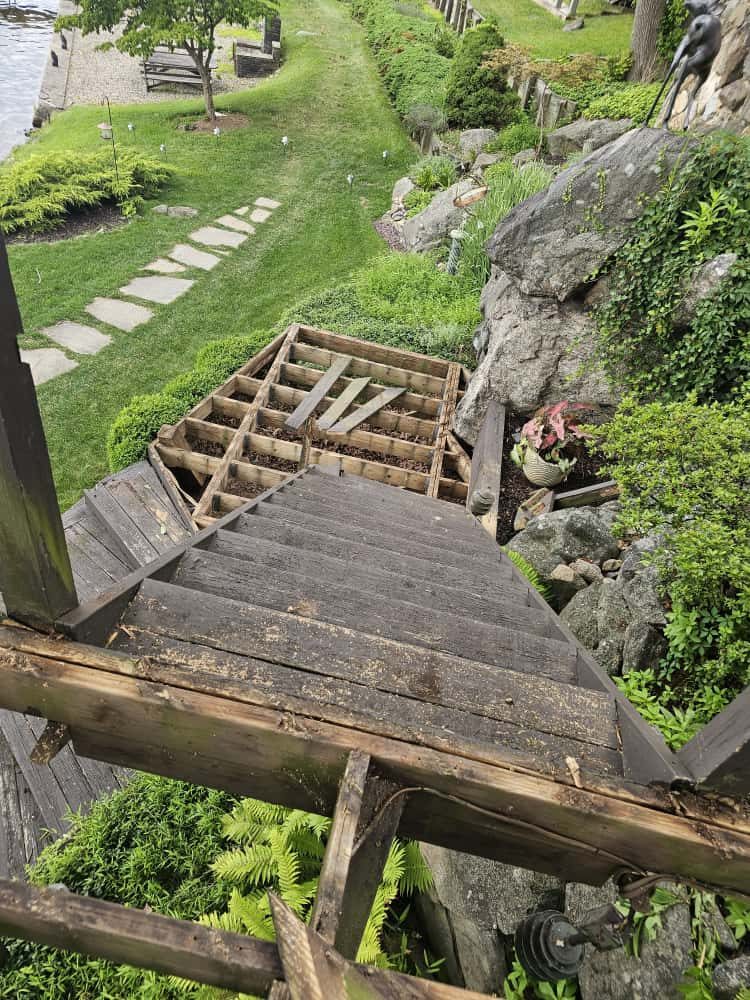
Often yes, when the framing is sound. Repair means replacing boards, rails or stairs; refinishing means cleaning and re-sealing wood. State rules allow repair or replacement of any deck part that does not provide structural support as ordinary maintenance, but structural framing and footings are another matter.
Signs a repair is not enough include soft or rotted joists, a wobbling ledger, posts that have shifted and rust-stained or corroded hardware. A builder should check the ledger and footings first, because a new surface over failed framing is a hazard.
Our deck repairs and deck refinishing pages describe those services. If the structure is failing, a rebuild is the honest answer.
Frequently asked questions
Do I need a permit to build a deck in Parsippany-Troy Hills?
New decks are reviewed under the state Uniform Construction Code, and the township runs a construction permit portal. Deck setback and coverage rules also sit in zoning. Confirm current requirements with the Building and Construction Division at 973-263-4366.
How deep do deck footings need to be in New Jersey?
Published municipal guidelines, such as Morris Township’s, list 36 inches as the minimum footing depth. Your township’s office can confirm the figure it applies to your lot.
How long does a deck project take?
It depends on size, design, permit review and weather. Permit approval happens before construction, so build that wait into your schedule. Your builder should give a timeline in the written estimate.
Is composite worth it over wood?
Composite trades a higher purchase price for less routine upkeep. Wood costs less up front and needs cleaning and sealing on a cycle. Think about the maintenance you will actually do over the years.
What should a good deck estimate include?
The materials by brand, dimensions, footing details, stairs and railings, the permit plan, payment terms and a start and completion timeline, all in writing and signed.
Sources and further reading
- Township of Parsippany-Troy Hills: Building and Construction (accessed 2026-11)
- Morris Township: Deck Guidelines (accessed 2026-11)
- Cornell Legal Information Institute: N.J.A.C. 5:23-2.7 Ordinary maintenance (accessed 2026-11)
- Trex: How to Space Deck Boards (accessed 2026-11)
- Rutgers Office of the NJ State Climatologist: Climate of New Jersey (accessed 2026-11)
- Monmouth County Consumer Affairs: Home Improvement Contractors (accessed 2026-11)