Can a Roof Be Repaired in Winter? What NJ Roofers Can (and Can’t) Fix in the Cold
Can a roof be repaired in winter?
Yes, many repairs can be done in winter if the roof is dry and safe to walk on. The catch is the shingles. Cold shingles are stiff, crack when bent and bond slowly, so manufacturers ask for extra steps below 40 degrees Fahrenheit. Small, local repairs hold well. Large jobs often wait for milder days.
That answer comes from how asphalt shingles are made. The strip of sealant on each shingle is activated by the sun’s heat, not by the air temperature alone. In summer a roof seals within days. In January a shingle can sit unsealed for weeks, and that changes what a good winter repair looks like.
Why does cold weather change how shingles are installed?
The Asphalt Roofing Manufacturers Association (ARMA) explains in its Residential Asphalt Roofing Manual that most shingles carry a factory-applied, heat-activated adhesive. In spring, summer and fall the bond usually forms within a few days. In winter, ARMA says, sealing varies with geographic location, roof slope and the direction the house faces.
Owens Corning’s technical bulletin on cold weather shingle installation, issued April 2026, applies when air and surface temperatures are at or below 40 degrees Fahrenheit. It says direct sun activates the sealant, that shingles installed in the cold may not seal until warmer temperatures arrive, and that they may take longer to lie flat. Malarkey’s cold weather bulletin adds that it is difficult to name a single temperature, because slope, shingle color, sun or shade, wind and which way the roof faces all change how fast the sealant activates. South and west slopes typically seal faster than north and east ones.
What do manufacturers tell roofers to do in the cold?
The guidance is consistent across brands. Here is what the bulletins and ARMA say, in plain terms:
- Hand seal. Owens Corning calls for each shingle along the entire roof perimeter to be sealed with four 1-inch dabs of ASTM D4586 roof cement on laminated shingles, and two dabs under each tab on three-tab shingles. Malarkey says hand sealing is strongly recommended when cold, wind or dust can keep the sealing strip from activating.
- Mind the gap. Owens Corning asks for a gap of no more than 1/16 inch between butt joints so shingles do not buckle against each other when they warm. Malarkey suggests a small space of about 1/32 inch.
- Warm the shingles. Malarkey tells crews to store material in a heated space, let shingles warm in the sun, and never bend, throw or drop bundles. ARMA says never to store shingles in extreme cold and to warm ridge shingles until they form without cracking.
- Skip cracked pieces. Both ARMA and Malarkey say not to install a shingle that cracks as it is formed.
- Use only the right amount of cement. Owens Corning and ARMA both warn that excess asphalt roof cement can blister shingles or squeeze out past the leading edge.
- Check the deck for ice. Malarkey’s bulletin begins with fall protection and a check for ice or frost on the deck or underlayment.
The wind side of this matters. Malarkey states that its wind warranties apply only when shingles are sealed, whether by hand or by the sealing strip. A winter repair that skips the sealing step can leave a shingle that lifts in the next storm.
Which repairs usually hold in winter, and which should wait?
The table below is a general guide, based on what the manufacturers describe, not a promise about any one roof. Your written estimate should say which items we would do now and which we would schedule for spring.
| Repair | Usually workable in cold weather? | Why |
|---|---|---|
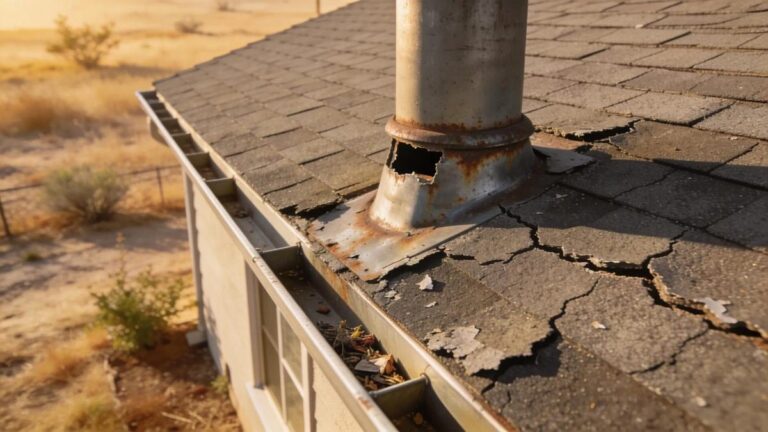
| Replacing a cracked pipe boot | Often yes | Small area; the flange and nearby shingles can be hand sealed |
| Replacing a few damaged shingles | Often yes, with care | Hand sealing replaces the missing sun-activated bond |
| Flashing repair at a wall or chimney | Often yes | Replacing failed metal disturbs few shingles, though any lifted shingles still need sealing |
| Rotted decking | Sometimes | Dry, safe access and a weather-tight finish are needed |
| Ridge cap or hip repair | With caution | ARMA says ridge shingles must be warmed so they do not crack when formed |
| Full tear-off and replacement | Usually better in milder weather | Large areas stay unsealed, and cold shingles are harder to handle |
A pipe boot is the classic example. Our guide to a cracked pipe boot behind many winter leaks explains why a small collar can cause a big ceiling stain, and why it is a fix that suits cold weather well.
What is a temporary repair and when does it make sense?
When the weather will not allow a lasting fix, a roofer can make a short-term repair to keep water out until conditions improve. That might mean re-securing a lifted tab with roof cement, covering a failed seam or protecting an exposed area. The point is to slow the damage while the permanent repair waits for sun and a dry forecast.
A good temporary repair is described honestly in the estimate. It should say what was done, what it does not solve and when we recommend finishing the job. Follow-up matters: a shingle hand sealed in January should be checked once spring warmth has bonded the strip. ARMA also notes that cold curl, the lifting of shingle edges in cold months, is a normal occurrence that should correct itself as the roof warms, so a curling edge is not always a defect.
What should I do when a leak appears in winter?
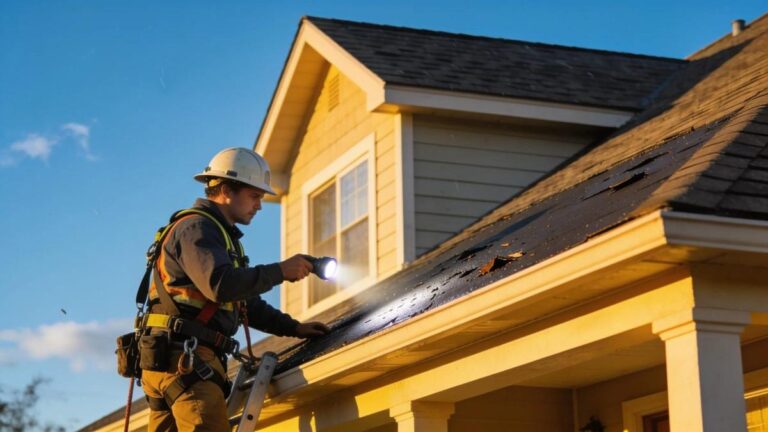
Start with the inside, where it is safe. Move belongings, place a container under the drip and note where and when the water shows. Take dated photos. Check the attic with a flashlight for dark stains on the underside of the deck, wet insulation and frost on nail tips.
Then consider the pattern. A leak along an outside wall during a thaw often points to ice backing up at the eave. ARMA describes ice dams as the cycle of snow thawing over the warmed part of the roof and refreezing at the cold eave, and recommends self-adhering eave flashing, reaching at least 24 inches inside the exterior wall, where icing is expected. A roof repair does not cure the heat loss that feeds an ice dam, so lasting solutions often combine roofing and attic work.
Do not climb onto an icy roof. If you want a professional look, schedule a written estimate through the roof repair page. A roofer will usually look at the roof surface and the attic together, then explain what can be done now.
How do Morris County homeowners decide whether to wait?
Match the repair to the risk. A small leak at a plumbing vent should not wait all winter, but a worn roof you plan to replace anyway might. If the roof is near the end of its life, spend the winter planning. ARMA calls roofs over 20 years old prime candidates for reroofing, and our roof replacement page covers the decision in detail.
Questions to ask any roofer before a cold-weather job:
- Will each repaired shingle be hand sealed, and with what material?
- Are shingles being stored and handled so they do not crack?
- Is this repair meant to be permanent or temporary, and when would you finish it?
- What does the written estimate say about weather delays?
Homeowners in Wharton and the rest of Morris County can use the same list. We give a written estimate, clean up the job site and walk you through the finished work.
Frequently asked questions
What temperature is too cold to repair a roof?
Manufacturers do not give one cutoff. Owens Corning’s bulletin applies below 40 degrees Fahrenheit and asks for extra steps, while Malarkey says a single temperature is hard to name because sun, slope and wind all matter. Ice or frost on the roof, high wind and wet shingles are better reasons to postpone work.
Will shingles seal in winter?
Slowly, and sometimes not until weather warms. The sealant is heat activated, and shingles installed in the cold may not bond right away. That is why manufacturers call for hand sealing with asphalt roof cement. South and west slopes with direct sun usually seal sooner than shaded north or east slopes.
Is a winter roof repair permanent?
It can be. Small repairs such as a pipe boot or a few shingles can be done properly in the cold with hand sealing. Some repairs are only temporary and are revisited in spring. Ask the roofer to say in writing which one you are getting.
Does cold weather void a shingle’s wind warranty?
Not automatically, but manufacturers tie wind coverage to proper sealing and installation. Malarkey says its wind warranties apply only when shingles are sealed, by hand or by the sealing strip. Check the wrapper and installation instructions for your shingle brand before any work.
Can you replace a whole roof in winter?
It is possible on mild, dry days, but large areas of unsealed shingles are exposed to wind and cold shingles are harder to handle. Many homeowners schedule full replacements for spring or fall. A roofer can tell you whether your roof is a good candidate for a winter start.
Sources and further reading
- ARMA: Residential Asphalt Roofing Manual, Design and Application Methods, 2014 (accessed 2026-10)
- Owens Corning: Cold Weather Shingle Installation Technical Bulletin, April 2026 (accessed 2026-10)
- Malarkey Roofing: Technical Bulletin, Installation Guidelines for Application of Asphalt Shingles in Cold Weather, October 2024 (accessed 2026-10)
- ARMA: Frequently asked questions (accessed 2026-10)