Skip to content

Cracked Pipe Boot? The Small Roof Part Behind Many Winter Leaks
What is a pipe boot and why does it crack?
A pipe boot is the rubber or neoprene collar that seals the gap where a plumbing vent pipe pokes through your roof. It sits on a flat metal or plastic base under the shingles. The rubber ages in sun and cold, so the collar often splits years before the shingles around it are worn out.
The Asphalt Roofing Manufacturers Association (ARMA) calls this part a preformed flashing flange, or “boot,” and its Residential Asphalt Roofing Manual tells installers to set it over the pipe in asphalt roof cement. The same manual says the flange should be inspected once a year for cracks. Fine Homebuilding makes the same point from a builder’s angle: a boot’s rubber collar can split or get damaged, and ordinary boots usually wear out before the shingles do.
Nothing about this is exotic. Plumbing vents let sewer gas out and air in, so almost every house with a bathroom has at least two or three of them. Each one is a hole in your roof that depends on a thin ring of rubber.
How can I tell if my pipe boot is cracked?
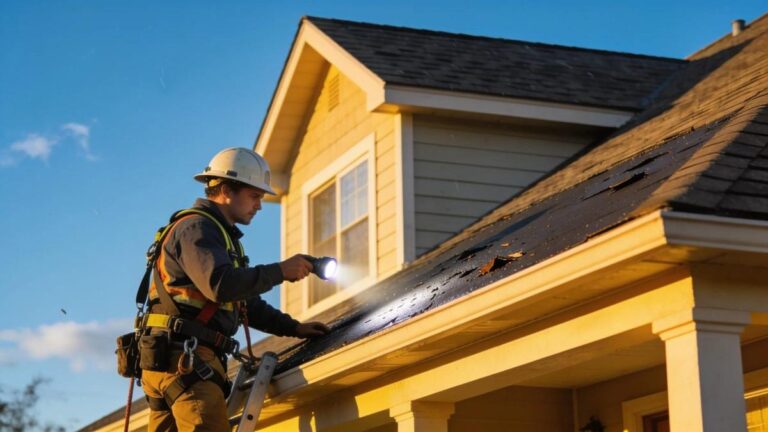
Start from the inside. Brown or tan rings on a ceiling near a bathroom, a damp spot on the wall beside a vent stack, or a drip that appears only during thaws all point toward a penetration leak. In the attic, a flashlight beam along the pipe may show a dark trail on the wood or wet insulation at the base.
From the ground, binoculars can show a lot. You are looking for these signs:
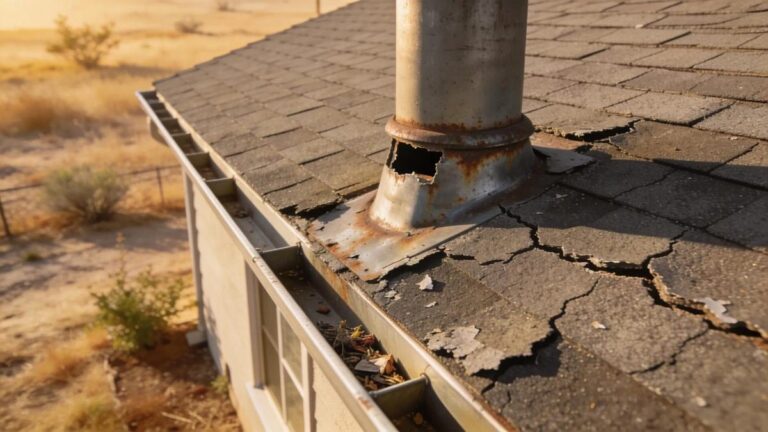
- A hairline crack or open split in the rubber ring, usually on the side that faces the sun.
- A collar that has shrunk or hardened and no longer hugs the pipe.
- A gap between the pipe and the boot where you can see daylight or dark space.
- A base flange that has lifted, with shingles above it curling or missing.
- Dried, crumbled roof cement or sealant around the flange edge.
Keep your feet on the ground. Winter roofs are slippery and a plumbing vent usually sits on a steep slope. A Malarkey cold-weather bulletin tells crews to wear fall protection and to check for ice or frost on the deck or underlayment before walking on it. A photo from the yard or the attic is enough for a roofer to start with.
Why do pipe boot leaks show up in winter?
Most boot leaks do not announce themselves in July. A small crack leaks only when enough water runs at it. Melting snow, a thaw after a storm or rain on snow sends a steady stream down the roof, and a split collar lets some of that stream follow the pipe into the house. Dry-weather months may pass with no stain at all, which is why the failure often seems to appear overnight.
Cold also changes the picture around the boot. ARMA notes that in winter the self-sealing action of shingles varies with location, roof slope and the direction the house faces. A shingle that is not yet bonded near a vent can lift in wind and let water reach the flange. ARMA also describes ice dams as the cycle of snow thawing over the warm part of the roof and refreezing at the cold eave. If the vent sits near the lower part of the roof, backed-up water from an ice dam can reach a boot that would never leak in an ordinary rain.
A leak at a plumbing vent is a small hole, but wet insulation and a stained ceiling cost far more to fix than the part that caused them. Our guide on whether a roof can be repaired in winter explains what holds in the cold and what is better done in milder weather.
What are the repair options for a cracked pipe boot?
The right fix depends on the condition of the shingles and the flange, not only on the collar. ARMA’s guidance for reroofing is to examine existing pipe flashing and, if it has deteriorated, remove it and install new flashing. If the flange itself is sound, a crew can lift its lower part, slide new shingles beneath it and reseal.
| Option | What it involves | Things to weigh |
|---|---|---|
| Full boot replacement | Shingles above the boot are lifted, the old flange is removed and a new boot is set in sealant and re-shingled | Most thorough; fixes the flange and the collar together |
| Repair collar or sleeve over the old boot | A fitted collar or sleeve slips over the existing boot and seals to the pipe | Useful when the base is sound and only the rubber failed; check that the base is not also cracked |
| Longer-lasting boot materials | Metal, lead or silicone-collar boots instead of a plain rubber one | Fine Homebuilding recommends better boots on roofs expected to last 30 to 50 years |
| Sealant or tape patch | Roofing sealant or flashing tape over the crack | Short-term at best; sealant dries and cracks again |
Fine Homebuilding’s guide to better boot flashings covers the common alternatives to a plain rubber boot, including lead, a two-piece galvanized steel boot, plastic boots and a silicone boot. The reasoning is simple: a part that costs a few dollars, set into a roof that should last decades, deserves a longer-lived design.
Whatever the method, ARMA warns against driving nails from new shingle courses inside the outer edge of the flange or close to the pipe, since each nail hole is another path for water. It also cautions that too much asphalt cement under shingles can cause blistering. Careful sealing matters more than a thick bead of goop.
Should I patch it with caulk myself?
A tube of sealant is tempting on a dry afternoon, but it rarely lasts. Fine Homebuilding notes that roofing cement at the pan can dry and crack, and a patch over a failing collar leaves the root problem in place. The other risk is the climb. A fall from a roof is a far larger problem than a leaking vent.
If you cannot get a repair scheduled right away, there are sensible stopgaps from the inside. Put a bucket under the drip, move stored items, and open the attic hatch so the wet area can dry. Photograph the stain with a date on it so you can compare later.
When you want the boot looked at, a roofer will check the pipe and the flange together, then check nearby flashing and shingles. This is the kind of detail work covered on our roof repair page, where we write the repair up separately from anything larger we find. For a once-a-year look at every penetration, a visit through roof inspections and maintenance fits the same job.
Is it the boot, or something else?
Not every stain near a vent is the boot. Use the pattern to narrow it down.
- If the stain sits directly below a plumbing vent and grows after rain or melt, suspect the boot or its base flange.
- If the stain runs along an outside wall during thaws, think ice dam and attic heat loss before any single penetration.
- If the stain sits at the chimney or beside a wall, the likelier source is step or counter flashing.
- If you see condensation on the pipe itself or frost in the attic, the problem may be warm, moist air in the attic rather than a hole.
Because water can travel along the deck before it drips, the point where it enters may sit uphill from the stain. That is why a roofer works from the roof and the attic together.
What should Morris County homeowners do this fall?
Fall is the easiest time to deal with a worn boot. Shingle sealant bonds in warm weather, crews can work safely and the roof is dry. If you live in a town such as Denville or elsewhere in Morris County, a short list will keep a small part from becoming a winter surprise:
- Count the vent pipes on your roof from the ground and look at each collar with binoculars.
- Check the attic for stains beside each pipe before the first hard freeze.
- Note the age of the roof. A boot on a roof past 15 or 20 years is usually near the end of its life, since ARMA calls roofs over 20 years old prime candidates for reroofing.
- Ask for a written estimate that lists the boot work separately, so you can see the scope.
Frequently asked questions
How long does a roof pipe boot last?
Sources disagree, because boots differ by material and exposure. Fine Homebuilding says plain rubber boots commonly wear out before the shingles do, while ARMA only advises an annual check of the flange. Treat any rubber boot over about ten years old as a candidate for replacement, especially on a sunny slope.
Can I replace a pipe boot in winter?
Often yes, if the roof is safe to work on. Replacement means lifting shingles, and cold shingles can crack and are slow to bond. Owens Corning’s cold-weather bulletin recommends hand sealing and extra care at or below 40 degrees Fahrenheit, so a winter fix may be done as a careful temporary step with a follow-up in spring.
Is a cracked pipe boot a serious problem?
The part is small, but the water it lets in can soak insulation, stain ceilings and damage the deck over time. It is usually quick to repair compared with the damage a slow leak causes. Do not ignore a stain just because the leak seems minor or only shows up in thaws.
Will a pipe boot leak show on the ceiling right away?
Not always. Water often runs along the deck or rafters before it drips, and an attic can hide a small leak for a season. Signs include brown rings, a musty smell near a bathroom, damp insulation around the pipe and drips that appear only during snow melt.
Does the plumber or the roofer fix a leaking vent pipe?
The roof-side seal, meaning the boot, flange and shingles, is roofing work. If the pipe itself is cracked, disconnected or leaking inside the house, that is plumbing. A roofer who checks the penetration will tell you which side the problem sits on.
Sources and further reading
- ARMA: Residential Asphalt Roofing Manual, Design and Application Methods, 2014 (accessed 2026-10)
- Fine Homebuilding: Back-vent pipe flashing (accessed 2026-10)
- Fine Homebuilding: A Guide to Better Boot Flashings (accessed 2026-10)
- Malarkey Roofing: Technical Bulletin, Asphalt Shingles in Cold Weather (accessed 2026-10)
- Owens Corning: Cold Weather Shingle Installation Technical Bulletin, April 2026 (accessed 2026-10)