 Skip to content

Home / Areas We Serve / Essex County / Montclair
Roofing · Montclair, Essex County
Roofing Contractor in Montclair, NJ
Most Montclair houses were standing before 1940. We repair and replace roofs, siding and gutters on them, with the town’s historic review rules in mind.
★ 4.5 on Houzz · find and review us on
✓ Free written estimate
✓ NJ HIC #13VH08024500
✓ Family-owned since 2014
Free estimate in Montclair
Free in-person estimate · No obligation · We reply fast

Family-owned since 2014
Wharton, NJ crew

NJ HIC #13VH08024500
State registered

Free written estimates
No pressure

7 NJ counties served
224 municipalities
Can Hidalgo Brothers work on a Montclair house built before 1940?
Yes. We repair and replace asphalt roofs, flat roof sections, siding and gutters on older Montclair homes, and we travel from our shop in Wharton to do it. Every job starts with a free, written estimate. If the house sits in a local historic district, plan for the township’s review before work begins.
Hidalgo Brothers LLC is family-owned since 2014 and registered as NJ HIC #13VH08024500. Montclair is one of the oldest housing markets we cover in Essex County, and that age shapes almost every roofing conversation here: how many layers are on the deck, what the flashing is made of, whether the original roof material is still under the current one, and who has to sign off on a visible change.
How old is Montclair's housing, really?
Older than almost anywhere else nearby. The Census Bureau’s 2020 to 2024 American Community Survey (ACS) puts the median year built for Montclair’s 16,521 housing units at 1938. That figure means more than half the town’s homes went up before the Second World War.
| Year built | Montclair units | Share | What we tend to find on the roof |
|---|---|---|---|
| 1939 or earlier | 9,809 | About 59% | Board sheathing, several old layers, chimneys and dormers with aging flashing |
| 1940 to 1959 | 2,399 | About 15% | Simpler gables and hips, often a second or third asphalt roof |
| 1960 to 1979 | 1,944 | About 12% | Mid-century houses and apartment buildings, some with low-slope sections |
| 1980 to 1999 | 939 | About 6% | Roofs from the last cycle now due for a close look |
| 2000 or later | 1,430 | About 9% | Newer buildings, many of them multi-unit |
Source: U.S. Census Bureau ACS 2020-2024 5-year, Montclair township, tables B25034, B25024, B25003 and B25035. Percentages are our arithmetic from the counts.
The same survey shows a mixed town. About half of Montclair’s units are one-family detached houses, about 19 percent sit in two- to four-unit buildings, and about 28 percent are in buildings of five or more units. Roughly 57 percent of occupied homes are owner-occupied. The 2020 census counted 40,921 residents on about 6.2 square miles of land, according to the township’s Wikipedia entry.
Montclair grew as a railroad suburb. The first line reached downtown in 1856, a second followed in 1868, and the Lackawanna Railroad opened a large terminal in 1912. The population peaked at 42,017 in 1930, which matches the census picture: most of the large single-family houses were built during that railroad era and are now close to a century old.
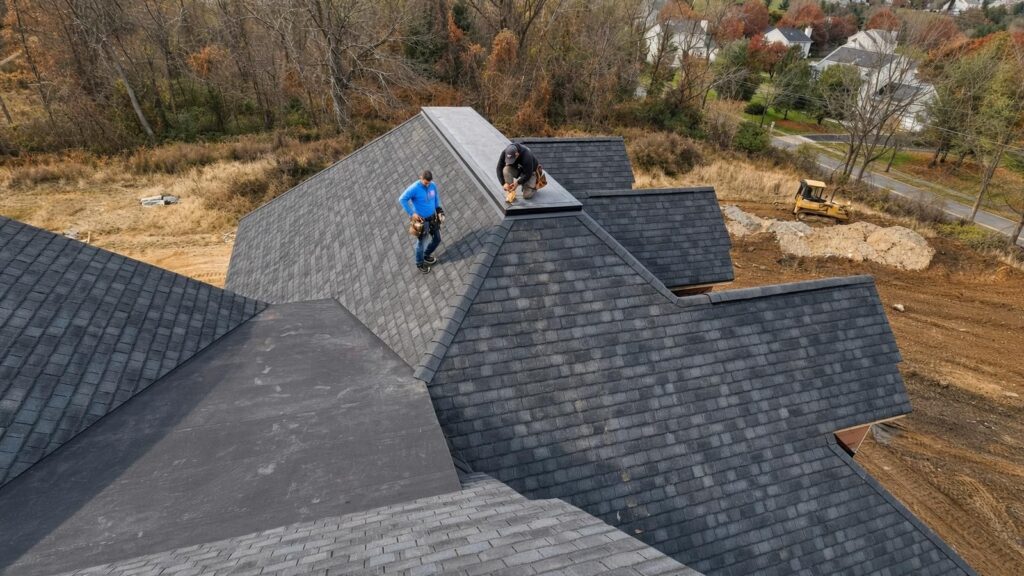
Does the Historic Preservation Commission need to see my roofing plans?
It depends on whether your house is a local landmark or sits in a local historic district, and on whether the work changes how the roof looks. Montclair’s Historic Preservation Commission reviews exterior changes to those properties through a Certificate of Appropriateness.
According to the township, Montclair has four locally landmarked historic districts (Town Center, Upper Montclair, Pine Street and Watchung Plaza) and 64 individually designated landmarks. The Commission holds public hearings monthly, on the fourth Thursday, in the Municipal Building at 205 Claremont Avenue.
The township’s Certificate of Appropriateness page lists work that does not need review. Two items matter most for a roofer and a siding installer:
What that list leaves open is a roof replacement that changes the look, such as moving from one material to another, changing color dramatically, or altering dormers, eaves or trim. Those are the conversations to have with the township’s historic preservation staff before you sign anything. Montclair publishes residential Historic Design Guidelines, based on the Secretary of the Interior’s Standards, and the Commission points applicants to them.
Heads up: Montclair also has districts and buildings on the State and National Registers. National Register status alone is not the same as local designation. Ask the township which applies to your address.
Talk to Hidalgo Brothers about your Montclair roof
Slate, wood shingle or asphalt: what goes back on an old Montclair roof?
Usually the material that is already there, unless it has truly failed or the review process allows a change. On a pre-1940 house, the first question is not which shingle to buy but what the roof is made of today and what was on it originally.
The National Park Service’s Preservation Brief 4 on historic roofing says good slate with quality flashing can last 40 to 60 years with minimal maintenance, and that individual slates can normally be replaced without disturbing the rest of the roof. It also warns that replacing flashing on a slate roof can mean removing a substantial area of surrounding slates. Slate and wood roof shingles are specialist work; ask us whether we can quote yours, and we will tell you plainly if we cannot.
Our everyday work in Montclair is on asphalt roofs, which cover most houses that were reroofed in the last few decades. A decision guide we use with owners:
Wall surfaces follow similar logic. Cedar shingle siding is common on houses of this age, and our cedar shake siding page explains how replacement in kind works. Where the township allows a substitute, fiber cement siding is the material owners most often ask about.
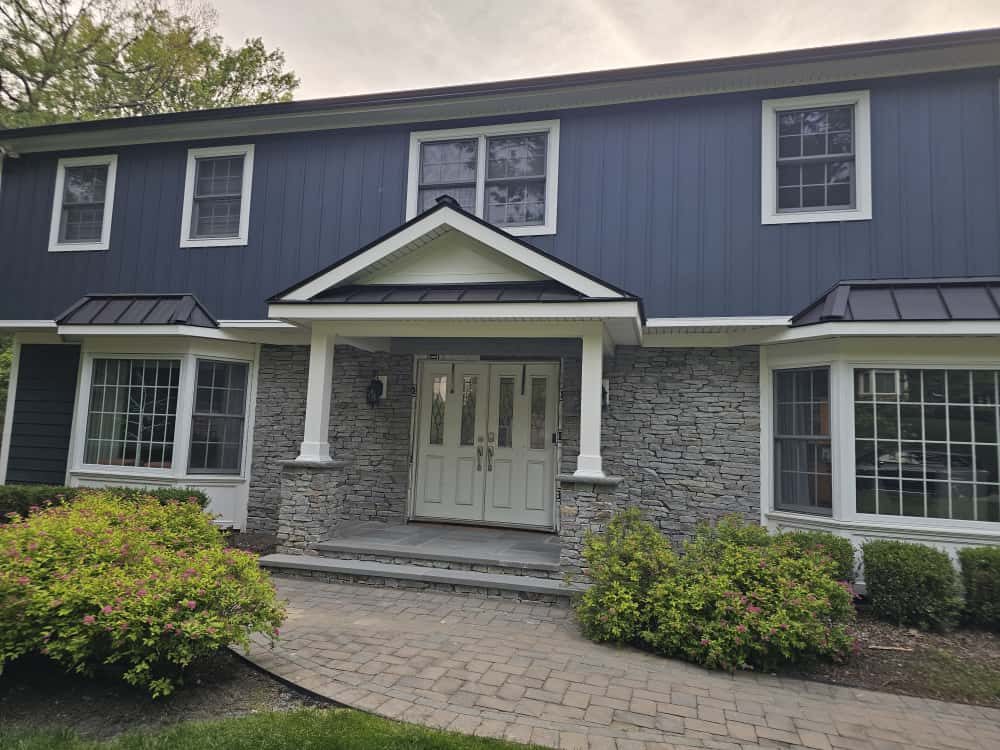
★★★★★
“Did a great job with the roof! Cleaned up completely around the house after installing it.”
Anja Loe · Google review · Nov 2020
Why do steep, complicated Montclair roofs leak at the joints?
Because each dormer, chimney, valley and wall intersection is a place where water changes direction, and older houses have a lot of them. Preservation Brief 4 calls flashing failure a major cause of roof deterioration and names dormers and the intersections of roof planes as danger spots.
Montclair sits on the east side of the First Watchung Mountain, according to its Wikipedia entry, and higher streets look out toward the New York skyline about 12 miles away. Steep pitches shed water quickly, which is good, but they also drive large volumes into a few valleys and gutters. On these roofs our inspection pays most attention to:
The Office of the New Jersey State Climatologist at Rutgers notes that north-central New Jersey averages about 51 inches of precipitation a year and that most areas see 25 to 30 thunderstorms annually. That is a lot of water to move off a roof with many seams.
What about two-family houses and apartment buildings?
They need a different conversation. With nearly half of Montclair’s units in attached or multi-unit buildings, many roofs here combine a pitched main roof with flat rear additions, porch roofs or a fully low-slope top.
A low-slope roof fails at drainage and seams first. Ponding water, clogged drains and loose flashing at parapets do more harm than the age of the membrane alone. Our flat roofing page explains what a written scope for a membrane roof should cover. For a building with several owners or an association, tell us when you call who decides on the work and what records exist for the current roof.
Have a roofing question in Montclair?
Monday to Friday, 8:00am to 6:00pm. Estimates are free and in writing.
Which approvals come first, and in what order?
Historic review, where it applies, comes before the construction permit question. Then the Montclair Building Office decides what needs a permit under the state code.
New Jersey’s rule on ordinary maintenance, N.J.A.C. 5:23-2.7, lists repair or replacement of existing roof covering on detached one- and two-family dwellings, siding on one- and two-family dwellings (polypropylene excluded) and gutter and leader work as work that needs no permit. Work affecting structural or fire safety is not ordinary maintenance. The township’s own permit overview says a permit is needed whenever you construct, enlarge, alter or repair a building, so describe your job to the Building Office and get its answer in writing.
The ice-barrier rule is often misunderstood here. NJ DCA Bulletin 07-3 says the code requires an ice dam membrane where the average daily January temperature is 25 degrees Fahrenheit or lower, and names Sussex County as that area in New Jersey. Montclair is outside it, which does not stop a careful installer from using one at eaves and valleys of a steep old roof.
Where does Montclair sit among our other service areas?
Montclair is in northern Essex County, bordered by Bloomfield, Cedar Grove, Glen Ridge, Orange, Verona and West Orange, with Clifton and Little Falls across the Passaic County line. We do not yet have pages for those towns.
To the southwest, Livingston is a newer, mostly single-family Essex suburb with a very different roof profile. North across the county line, Paterson is a city where two-family houses are the most common building type. Our shop is in Wharton, Morris County, and we can also schedule a roof inspection and maintenance visit for a Montclair house before winter.
Frequently asked questions
Do I need Historic Preservation Commission approval to replace my Montclair roof?
Only if the house is a local landmark or in a local historic district and the work changes its design, scale or appearance. The township lists maintenance and repair of existing roofing that keeps the same look as exempt. Ask the township’s historic preservation staff before a material or color change.
Which Montclair neighborhoods are local historic districts?
The township lists four locally landmarked districts: Town Center, Upper Montclair, Pine Street and Watchung Plaza, plus 64 individual landmarks. Boundaries matter, so confirm your specific address with the Planning and Community Development department rather than assuming by neighborhood name.
Can you repair a slate roof in Montclair?
Slate is specialist work and not part of our standard service list. Ask us during the estimate whether we can quote your roof. If we cannot, we will say so early so you can find the right trade before the problem grows.
Why does my old Montclair house leak only in heavy rain?
Heavy rain overloads the weakest joints first: a valley, a chimney, a dormer wall or an undersized gutter that backs up under the roof edge. The shingles in the open field may be fine. A close look at the flashing usually finds the source.
Is replacing siding with the same material exempt from historic review?
The township’s Certificate of Appropriateness page lists replacement of existing clapboards, shingles or other siding with identical material as exempt. Changing to a different material is a separate question for the township, so raise it before ordering anything.
Do Montclair roofs need an ice barrier under the shingles?
The state code requirement applies only where January average temperatures are 25 degrees Fahrenheit or lower, which NJ DCA identifies as Sussex County. Montclair is outside that area, though many installers still use ice and water membrane at eaves and valleys on steep roofs.
Do you work on Montclair two-family houses and small apartment buildings?
Yes, we can inspect them and prepare a written estimate. Many have a pitched main roof plus flat porch or rear sections. Tell us how many units the building has, who approves the work, and when the current roof went on if you know.
How do I get an estimate for my Montclair home?
Call (973) 525-6835 or use the quote form on this page. We visit, inspect the roof or area you are concerned about, and send a written estimate with scope and materials. There is no pressure to sign, and comparing bids is welcome.
Sources and further reading
Last reviewed: November 26, 2026 · Hidalgo Brothers Roofing, Wharton, NJ
Montclair on the map
On the job with Hidalgo Brothers
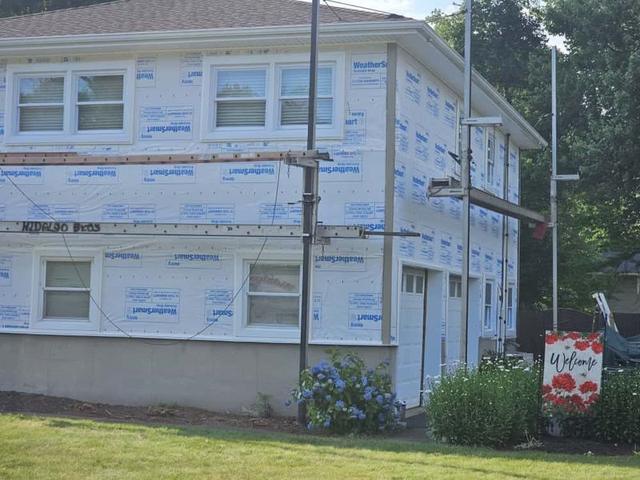
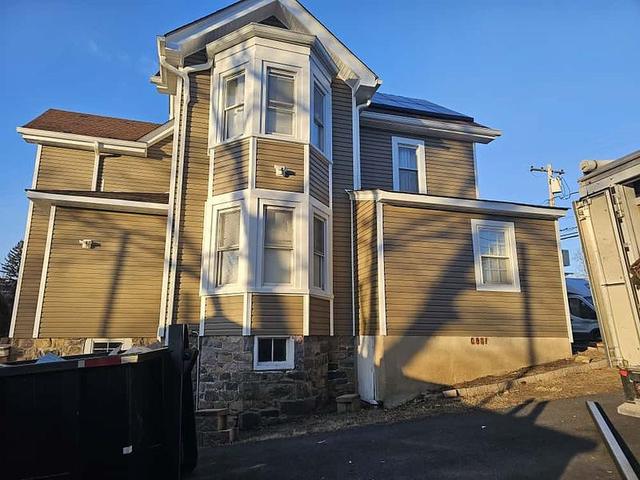
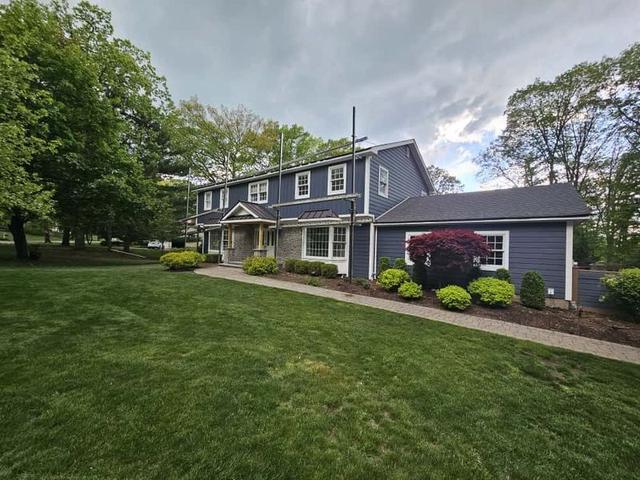
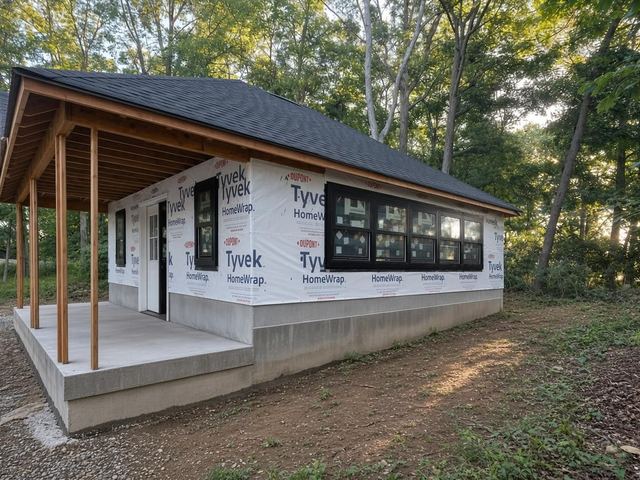
Photos from Hidalgo Brothers crews at work on New Jersey homes.
What homeowners say
4.5
★★★★★
Rated on Houzz
★★★★★
“Very happy with them! Did a great job with the roof! Cleaned up completely around the house after installing it. They are very reliable and stand by their work. A big branch fell on our roof and punctured some shingles. They came the next day and fixed it. Highly recommend!”
A
Anja Loe
Google review · Nov 2020
★★★★★
“I contacted them and they responded quickly and courteously. I had several issues that I wanted to discuss. They listened and I had an estimate within a very reasonable time. The workmanship was top notch, the crew was pleasant and helpful. The price was VERY reasonable. I would DEFINITELY recommend the Hidalgo Brothers for your home project!”
F
Frank Bell
Google review · Jul 2020
★★★★★
“Hidalgo Brothers reroofed my barn and my house. Both jobs were performed with 5-star professionalism, job performance, and clean up. I recommend Hidalgo Brothers for all your roofing needs. I look forward to working with them on future home improvement projects.”
J
Jay Engels
Google review · Apr 2019
Read more reviews on
From free estimate to final walkthrough
01
Free estimate
We inspect your roof, siding, gutters or deck and give you a written estimate.
02
Planning
We confirm details, help with material selections and schedule around your household.
03
Installation
Work is completed to code and manufacturer specs, with updates throughout.
04
Cleanup & walkthrough
We clean the jobsite and walk through the finished work with you.
05
Ongoing support
If something doesn’t look right after the project, we want to hear from you.
All 21 New Jersey counties.
Hidalgo Brothers works across New Jersey from our base in Wharton, Morris County. Choose your county to see the towns we cover.