The Stages of a Full Exterior Remodel in New Jersey, From Contract to Walkthrough
What are the stages of a full exterior remodel?
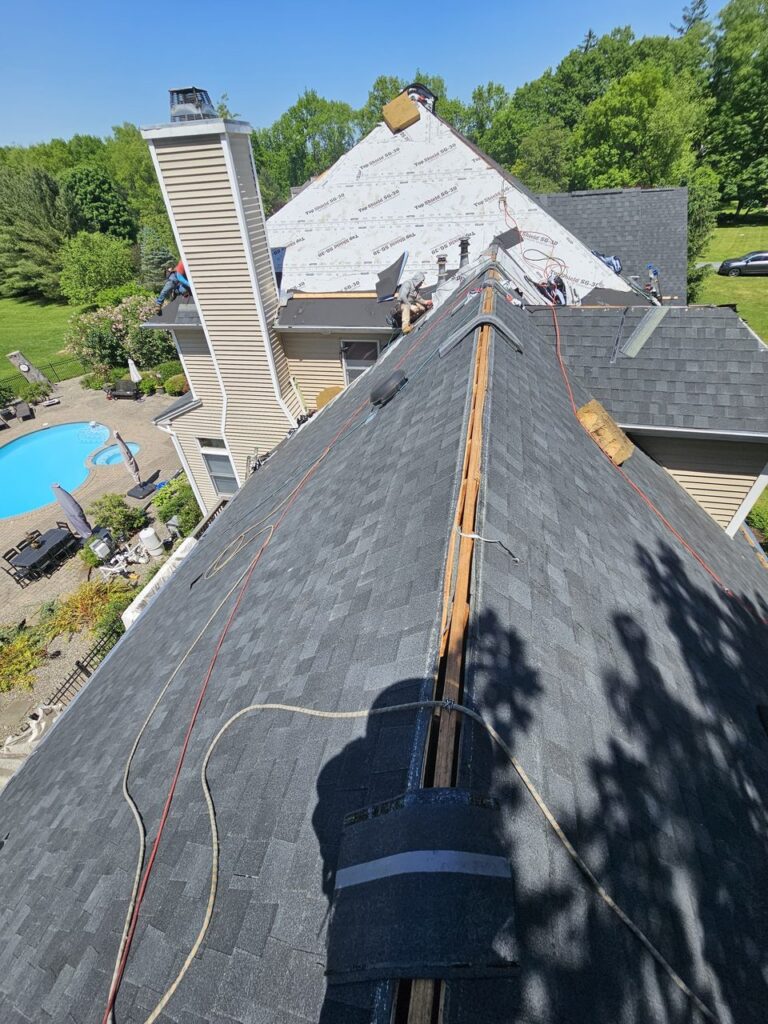
A full exterior remodel usually runs in eight stages: written scope and contract, permit check, site protection, tear-off, roof, siding, gutters and deck, then cleanup and a walkthrough. The roof goes first because it sheds water onto everything below it, and the finish items go last because they are easiest to scratch.
Hidalgo Brothers works on roofing, siding, gutters and decks. Windows and doors are outside what we do, so those items would come from another trade and need to be scheduled around the exterior work. The table below shows the whole sequence at a glance.
| Stage | What happens | What you decide |
|---|---|---|
| 1. Scope and contract | Walk the house, write the scope, agree materials and schedule | Products, colors, payment terms |
| 2. Permit check | Confirm which work needs a permit in your town | Who handles the paperwork, in writing |
| 3. Protection | Cover plantings, move furniture, plan staging area | Where materials and dumpster sit |
| 4. Tear-off | Old roofing, siding or deck boards come off | How to handle hidden rot found underneath |
| 5. Roof | Deck repair, ice barrier, underlayment, shingles | Shingle type and ventilation plan |
| 6. Siding and trim | Weather barrier, flashing, siding, trim | Material, color, trim style |
| 7. Gutters and deck | Gutters hung on finished trim, deck framed and finished | Gutter type, decking material |
| 8. Cleanup and walkthrough | Magnet sweep, final look at every detail | Punch list before final payment |
Why does the order matter?
Water runs downhill, and so does damage. A new roof edge drops runoff onto the walls below, so the roof is finished before siding goes up. Siding is hung before gutters because gutters and downspouts attach to the trim and wall surface. A deck attaches to the house wall, so the ledger flashing has to be worked into the weather barrier behind the siding.
Doing it out of order creates rework. Siding installed first can be scuffed by roof tear-off, and a gutter hung before the fascia is straight and sealed may need to be taken down again. A single crew or a coordinated schedule avoids those handoff problems. If you are replacing only some of the exterior, the same logic holds: whichever item sits highest on the house goes first.
This sequence is standard building practice rather than a code rule, so ask your contractor to show the order on the schedule. For the roof stage, see our page on roof replacement in Morris County; for the wall stage, our siding repair and installation hub covers the materials.
What goes in the contract before work starts?
Everything that affects price, appearance or timing should be written down. The Insurance Institute for Business and Home Safety warns homeowners to get all terms in writing: cost, schedule, payments and the work to be done, and never to sign a contract with blanks. It also says not to pay in full or sign a completion certificate until the work is finished and the rebuilt areas meet current code.
A good scope names the products by manufacturer and line, the color, the underlayment and flashing, how rot found during tear-off will be handled and billed, who removes debris, and what the start and finish window is. Write down any item you expect, such as drip edge or new vents, so it is not a surprise on the invoice. The IBHS and NICB guidance also suggests getting more than one estimate and not letting anyone pressure you.
New Jersey requires home improvement contractors to be registered with the state, and you can check a registration with the Division of Consumer Affairs before signing. Hidalgo Brothers’ registration number is NJ HIC #13VH08024500.
Which parts of the project need a permit?
It depends on the work and the town. Under New Jersey’s Uniform Construction Code, ordinary maintenance needs no permit, and the state’s rule lists repair or replacement of existing roof covering on detached one- and two-family dwellings in that category. Work affecting structural or fire safety is excluded from ordinary maintenance.
You can read the rule text through Cornell’s Legal Information Institute. The state’s construction permit page separates full permits, minor work and ordinary maintenance, and tells applicants to file with their Local Construction Code Enforcement Office.
So a like-for-like shingle replacement may need no permit, while a new deck, structural repair or change to the roof framing may. Siding, gutters and decks are not covered by that roof-covering line, and local practice varies. Ask your town’s construction office what applies to your address, and have the answer written into the contract rather than assumed. For help with towns in the county, see roofing in Morris County.
Does a pre-1978 house change the plan?
Yes, if painted surfaces will be disturbed. The U.S. Environmental Protection Agency’s Renovation, Repair and Painting rule covers paid work that disturbs painted surfaces in housing built before 1978, and it requires firms to be EPA lead-safe certified and to use lead-safe work practices. Homeowners generally are not covered for work on their own pre-1978 homes, but the rule applies if you rent out part of the home.
Exterior remodels touch old paint more than people expect: window and door trim, fascia, soffits, porch posts and old siding. If your home is older, ask any firm you are considering whether it is EPA lead-safe certified and how it contains dust and paint chips. EPA’s lead-safe page has a search tool for certified firms.
Older homes are common across Morris County, so this question is worth asking early, before tear-off begins.
What does the weather allow in New Jersey?
Most exterior work can happen across several seasons, but each material has limits. Rutgers climatologists report that the northern highlands have about 163 freeze-free days a year, with a last spring frost averaging around May 4 and a first fall frost around October 7. Snow can fall in the highlands from about mid-October to the end of April, and nor’easters are most frequent from October through April.
Those dates are averages, and they vary a lot. A job planned for November can lose days to wind or sleet, and a summer schedule can lose days to storms; the state averages 25 to 30 thunderstorms a year. Shingles need to seal in warm sun, paint and caulk have temperature limits, and wet framing cannot be covered. Build slack into the schedule and ask how the crew protects an open roof overnight.
Source: Rutgers Office of the New Jersey State Climatologist.
What surprises can appear at tear-off?
The most common surprise is damaged wood. When old roofing, siding or deck boards come off, the deck, sheathing, fascia or framing underneath can show rot, rusted fasteners or water stains. Those repairs are part of doing the job correctly, and they are the item most likely to change the price.
Agree beforehand how hidden damage will be priced. A line such as “replace rotted roof decking at an agreed rate per sheet, approved before the work” gives you a number to compare. Ask to see photos of what is found so you understand what you are paying for.
On the roof, the 2021 International Residential Code requires an ice barrier where the average January temperature is 25 degrees F or lower. The barrier runs from the lowest edge to at least 24 inches inside the exterior wall line. Whether your town falls in that area is a question for the construction office; many roofers in northern New Jersey install it routinely along the eaves. You can see the language at UpCodes’ IRC chapter.
How do the final walkthrough and payments work?
Walk the whole exterior with the crew lead and a written list. Check roof edges and flashings from the ground, siding joints and corners, trim caulk, gutter slope and downspout outlets, and any deck rails or stairs. Write down anything you want corrected, then confirm in writing when it is done.
Hold the final payment until that list is closed, as the IBHS advice above recommends. Keep copies of the contract, change orders, product labels and photos. Manufacturer instructions for warranties usually require proof of what was installed, so a folder of papers is useful years later.
Cleanup should include a magnet sweep for nails along the driveway and lawn edges. At Hidalgo Brothers, the last two steps in our process are cleanup with a walkthrough, and ongoing support if something does not look right afterward.
How do you maintain a new exterior?
Look at it in spring and fall. The Asphalt Roofing Manufacturers Association says a roof system and its components should be examined in both seasons, and flashings are the most vulnerable points. Keep gutters and surfaces clear so water drains freely, trim branches that scrape the roof, and keep downspouts from discharging onto a lower roof.
Siding and decks need their own routine: rinse dirt, check caulk joints, and watch for splits or soft spots near the ground. The ARMA spring inspection guidance is a good checklist for the roof portion. For a second set of eyes, use our roof inspections and maintenance page, and when you are ready to plan a project, request a written estimate on our contact page.
Frequently asked questions
How long does a full exterior remodel take?
There is no single number. Duration depends on the size of the house, the roof pitch, the materials, how much hidden rot appears and the weather. Ask your contractor for a written schedule by stage, and expect that tear-off and weather can shift it. A roof alone moves faster than a roof, siding and deck together.
Can I live in the house during an exterior remodel?
Usually yes. Expect noise, parked trucks and dust, and plan for early starts. You may want to move vehicles and outdoor furniture away from the work area and secure pets. Ask the contractor which days are loudest, such as roof tear-off, so you can work from elsewhere if needed.
Should the roof or the siding be done first?
The roof, normally. Runoff, debris and tear-off activity come from above, so doing the roof first protects new siding from damage. Siding follows, then gutters, then the deck, because each of those attaches to or depends on the surfaces finished before it.
Does an exterior remodel need a permit in New Jersey?
Sometimes. New Jersey classes replacement of existing roof covering on detached one- and two-family homes as ordinary maintenance with no permit, but structural work and some other items can need one. Rules vary by town, so confirm with your Local Construction Code Enforcement Office and get the answer in your contract.
What is a punch list?
It is the written list of small items to finish or correct at the end of a job, such as touch-up caulk, a loose trim piece or a missing downspout strap. You make it during the walkthrough, the contractor completes it, and final payment follows once every item is closed and you agree.
What season suits an exterior project in New Jersey?
Spring through early fall gives the most workable days, though crews also work in other seasons when conditions allow. Book early, since good weather windows fill up, and leave room in the schedule for rain days. Winter work is possible for some tasks but limited for others.
Sources and further reading
- IBHS and NICB: Partner to combat roofing contractor fraud (accessed 2026-11)
- Cornell Legal Information Institute: N.J.A.C. 5:23-2.7 Ordinary maintenance (accessed 2026-11)
- NJ Department of Community Affairs: Construction permit forms (accessed 2026-11)
- U.S. EPA: Get the lead out, lead-safe renovation (accessed 2026-11)
- Rutgers Office of the New Jersey State Climatologist: New Jersey climate overview (accessed 2026-11)
- UpCodes: 2021 International Residential Code, Chapter 9 Roof Assemblies (accessed 2026-11)
- Asphalt Roofing Manufacturers Association: Spring roof inspection (accessed 2026-11)