Skip to content

Squirrels in the Soffit? How Fall Animals Get Into NJ Rooflines and How to Seal Them Out
How do squirrels get into a soffit or roofline?
Squirrels get in through weak spots in the roof edge: loose or rotted trim, unscreened vents, gaps where the fascia meets the soffit, and torn vent screens. Penn State Extension says squirrels find their way into buildings through loose siding or ventilation screens, and that they chew siding and the area under eaves to open entry points for nests.
The soffit is the underside of the roof overhang. It is often thin vinyl, aluminum or wood panel with vents in it, which makes it an easy target. Once an animal has pushed or chewed through, it reaches the attic, wall cavities or the space above the soffit. From there it can tear at insulation, and Penn State warns that squirrels in buildings can damage walls, insulation and electrical wires.
This post is about the building side of the problem: what makes a roofline vulnerable, and what repair follows once the animals are gone. Getting the animals out is a separate job for a wildlife professional, and we do not offer wildlife removal.
Why do squirrels move into rooflines in the fall?
Fall is a time of year when squirrels look for protected places, and some are still raising young. The Humane Society says babies are likely present from February through May and again from August through October. A female nesting in an attic is the usual story. So a scratching sound in October may be a nest with young, not a lone animal.
Species and timing vary, which is why guessing is risky. Penn State Extension describes eastern gray squirrels as breeding in mid-December or early January, and again in June, red squirrels from February through September, and notes that flying squirrels are especially likely to nest in attics and wall spaces because of their small size. Breeding calendars differ by source and by year, so treat any date as a warning to check for a nest, not a rule that clears you to seal.
Common signs you have a squirrel nesting near the roofline:
- Scratching or thumping above the ceiling or inside the soffit, especially during daytime hours, since the Humane Society notes adults usually leave during the day.
- Visible chewed edges on the soffit, fascia, vent screens or roof edge trim.
- Shredded insulation, leaves, twigs or cardboard at an opening. The Humane Society says a squirrel nest is usually built of insulation, cardboard and leaves.
- A tree limb close to the roof edge, which gives animals an easy route to the opening.
Why shouldn’t you just seal the hole?
Sealing a hole with a squirrel or her young still inside traps them, and the mother may tear at the house trying to get back to the babies. The Humane Society advises waiting a few weeks if babies are present, until they are old enough to leave with their mother, and to wait until spring if it is cold, because excluding squirrels in deep winter can threaten their survival.
New Jersey’s wildlife agency makes a related point. The Division of Fish and Wildlife’s relocation policy states that before relocating any adult wildlife in spring and summer, a search for newborns should be conducted, and if found, the young must be relocated with the adults. It also favors fixing the entry: if exclusionary devices are not used, the policy says, the problem will continue even after the animal is removed.
Two more points from that policy are useful for homeowners:
- Bats are a different case. The policy says evictions and exclusions of bats should not be conducted between May 1 and July 30 unless there is an imminent public health threat determined by the Department of Health. If the sound is a high-pitched chirp at dusk, you may not have squirrels at all.
- State rules allow property owners to control damage. N.J.A.C. 7:25-5.21 says owners and occupants of dwellings suffering damage from squirrel and several other species may control them by lawful procedures at any time, subject to State law and local ordinances. That does not mean DIY trapping is a good idea. Ask a professional, and check your town’s rules.
How is a squirrel exclusion done properly?
A proper exclusion lets the animals leave and then closes every opening with materials they cannot chew through. The usual sequence, drawn from the Humane Society and Penn State guidance, looks like this:
- Find the entry point and the nest. Inspect the attic interior or, if there is no attic access, the exterior eaves, vents and roof edge. Common entry points are unscreened vents and loose or rotten trim boards.
- Check for young. Listen for scratching and look for the nest before anything is blocked.
- Let the animals leave. Adults usually leave during the day. A one-way door lets squirrels leave but prevents their return, and Penn State cites a simple excluder: an 18-inch section of 4-inch plastic pipe angled down at 45 degrees over the opening.
- Watch for frantic re-entry attempts. The Humane Society says they often mean young are still inside. In that case, the patch comes off, the mother returns and a professional decides what happens next.
- Seal with metal. The Humane Society recommends metal flashing so squirrels cannot reopen the access points. Penn State specifies heavy 0.5-inch wire mesh for openings.
- Check the wiring. The Humane Society advises having an electrician check for chewed wires, which can cause fires.
The National Wildlife Control Operators Association suggests homeowners ask any wildlife operator whether the animal is likely to return and whether it may have young nearby, to confirm who will check traps and how often, and to get a written contract. Traps, per the association, must be checked at least once a day.
What roofline repairs follow after the animals are out?
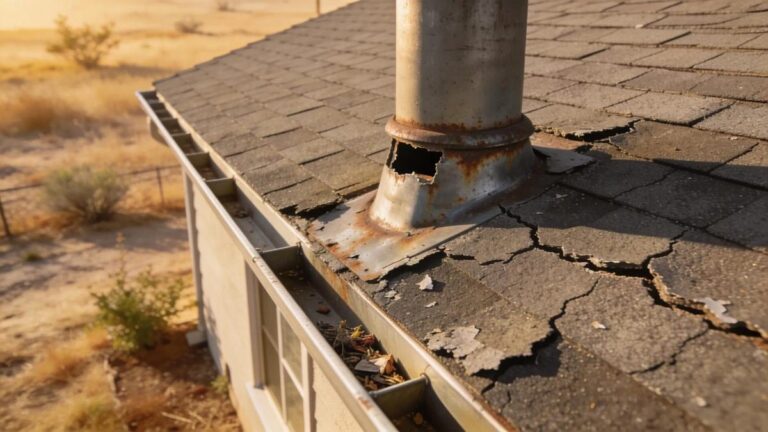
Once the animals are gone and the attic is checked, the repair is a building job: replace damaged trim, restore the soffit and fascia, screen the vents and flash the gaps. A roofer’s work is to rebuild the weak spot so the same entry does not come back, and the roofer should be told what the wildlife professional found.
| Damaged area | Typical repair | What it prevents |
|---|---|---|
| Chewed soffit panel | Replace the panel, screen the vent | Re-entry through the underside of the overhang |
| Rotted fascia or trim | Replace the board and seal seams | Soft wood squirrels can chew through |
| Gap at fascia and roof edge | Close with metal and flash | A gap wide enough for a head to pass |
| Torn or loose vent screen | Replace with sturdy mesh, fasten securely | Access to attic vents |
| Open ridge or gable vent | Add backing screen where needed | Animals entering high on the roof |
Our post on rotted fascia boards and what repair costs explains how soft trim shows up and what a replacement involves. Repairs at the roof edge, flashing and vents are covered on our roof repair page, and an annual look at the roof edge falls under roof inspections and maintenance.
How can you make the roofline less inviting?
Reduce the reasons an animal would try and remove the easy routes in. These steps come from the guidance above and from general building practice:
- Repair rotted trim promptly, since softened wood is easier to chew.
- Keep vent screens intact and fastened. Penn State names vent screens as a common entry route.
- Install a commercial chimney cap once a squirrel is gone, as the Humane Society advises.
- Trim limbs that touch or hang near the roof edge, if you can do so safely from the ground.
- Keep gutters clear. A gutter full of debris holds moisture against the fascia and rots it faster.
A periodic look at the roof edge is sensible for any home. We work on roofs in Denville, Randolph, Chester Township and across the county, and the rule is the same everywhere: fix soft trim and loose screens before animals find them.
Frequently asked questions
When is the right time to seal squirrels out of the roofline?
After you are sure no young remain inside. The Humane Society says to wait a few weeks if babies are present, and to wait until spring if the weather is cold. A wildlife professional can confirm that the nest is empty before the opening is closed.
Can I trap the squirrel myself?
New Jersey rules let owners of dwellings control squirrel damage by lawful procedures, subject to state law and local ordinances. But trapping a nesting mother can orphan her young, and relocation is regulated by the Division of Fish and Wildlife. A licensed or experienced wildlife operator is the safer route.
What material stops squirrels from chewing back in?
Metal. The Humane Society recommends metal flashing to keep squirrels from reopening an access point, and Penn State Extension specifies heavy 0.5-inch wire mesh. Plastic, thin vinyl and soft wood trim can be gnawed through.
Do you remove squirrels?
No. We do not offer wildlife removal. We repair and rebuild the roofline once the animals are out, including damaged soffit, fascia, vents and flashing. We can recommend asking a wildlife control operator how they handle young animals and a written contract.
How do I know if the noise is squirrels or something else?
Sound alone is unreliable. A wildlife professional can identify the animal from the entry marks, the nest and where the activity is. It matters because New Jersey’s wildlife policy says bat exclusions should not be done between May 1 and July 30 unless there is an imminent public health threat.
Sources and further reading
- Penn State Extension: Tree Squirrels (accessed 2026-10)
- Humane World for Animals: What to do about squirrels (accessed 2026-10)
- NJ Division of Fish and Wildlife: Policy on the Relocation of Wildlife (accessed 2026-10)
- NJDEP: N.J.A.C. 7:25, Division of Fish and Wildlife Rules (accessed 2026-10)
- National Wildlife Control Operators Association: Hiring a Wildlife Control Company (accessed 2026-10)