Roofing in Parsippany-Troy Hills, NJ: Repair, Replacement and Local Rules
Should a Parsippany-Troy Hills homeowner repair or replace a roof?
Repair fits when damage is local and the rest of the roof is sound, such as a failed flashing or a handful of lifted shingles. Replacement fits when problems are widespread, repairs keep recurring, or the deck beneath is compromised. A written inspection that shows where water enters is the evidence to decide on, not a percentage formula.
Parsippany-Troy Hills sits in northern New Jersey, where freezing nights, wet snow and wind-driven storms test roofs every year. The sections below separate what is verified from what is folklore, then walk through permits, hiring and the questions an estimator should answer.
How do repair and replacement compare in practice?
Use the table to sort your situation. It does not replace an inspection, but it shows which facts push a decision one way.
| Situation | Leans toward repair | Leans toward replacement |
|---|---|---|
| Leak source | One identifiable point, such as a vent boot or flashing | Several leaks or stains in different rooms |
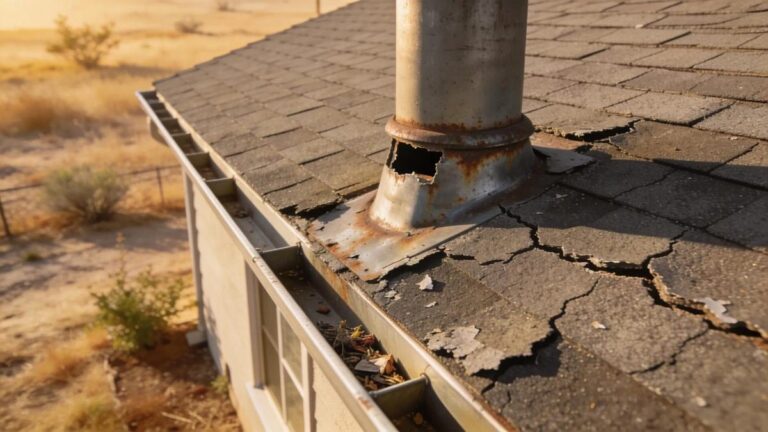
| Shingle condition | A few missing or lifted pieces on an otherwise flat field | Widespread curling, cracking or granule loss |
| Wood deck | Dry and solid when probed from the attic | Soft, stained or sagging sections |
| History | First problem in years | Repeated repairs in the same seasons |
| Attic evidence | Dry sheathing and insulation | Frost, mold or damp insulation tied to poor airflow |
Repairs are cheaper today; replacement can be the cheaper path over time once repairs stack up. For help sizing a small fix, see our roof repair page, and for a full tear-off, read about roof replacement in Morris County.
Is there a 25 percent rule for roofs in New Jersey?
You will often hear that once more than a quarter of a roof is damaged, the whole thing must be replaced. In the state’s ordinary maintenance section, that is not what the roofing item says. In the text of N.J.A.C. 5:23-2.7 published by Cornell’s Legal Information Institute, roof covering is listed as ordinary maintenance for detached one- and two-family dwellings with no percentage cap attached. The 25 percent figure appears in other items, such as siding on buildings other than one- and two-family homes.
So treat 25 percent as a casual guideline at best. Your insurer’s policy language, your manufacturer’s terms and your town’s rules can each set their own conditions, and only those documents bind you. Ask the estimator to show you the damaged areas instead of quoting a ratio.
How do nor’easters and winters affect Parsippany roofs?
Nor’easters are the storms to plan around. NOAA’s education office explains that they are most common from September through April, most severe in winter, and can bring gusts stronger than hurricane force along with heavy snow and rain. The Office of the State Climatologist at Rutgers reports 40 to 50 inches of snow a year in the northern zone.
Two failure patterns follow:
- Wind lifts shingle edges and ridge caps, breaking seals so water can get under them.
- Heat from the house melts snow at the roof surface; the water refreezes at the eaves and backs up.
ENERGY STAR describes the second pattern: air leaking into the attic warms the roof, and its guidance is that air sealing combined with attic insulation can help alleviate ice dams, with sealing done before insulating. The Asphalt Roofing Manufacturers Association adds that proper ventilation, with intake providing 50 to 60 percent of the venting area, reduces premature shingle wear and the risk of ice damming. For a storm-specific fix, see our storm damage roof repair page.
What local conditions in Parsippany-Troy Hills matter to a roof?
The township was incorporated in 1928 by combining the villages of Parsippany and Troy Hills, according to the township’s history page, and its listings include the Troy Meadow Historic District on the National Register of Historic Places. A township with that history is not uniform, so avoid assuming your roof faces the same exposure and drainage as a neighbor’s.
Water is a recurring theme. The township’s floods page warns that flooding can result from rain, snow, coastal storms and dam or water system overflows, and that flash floods can come with no warning. It links the Rockaway River gage and flood insurance resources. Roofs are not flooded, but the same storms overwhelm gutters, flashing and undersized downspouts, which pushes water behind siding and into basements. If you live near the river, review the township’s flood map resources, and ask any contractor how gutters will discharge.
What should you know about permits?
Start with the municipality. Parsippany-Troy Hills has its own township construction code office, so call it to ask whether your reroof or repair needs a permit and what inspections follow. The state baseline treats like-for-like roof covering on one- and two-family houses as ordinary maintenance, but structural changes, townhomes and association properties can differ, so confirm before you sign.
Two points from the Division of Consumer Affairs help here. Contractors who are not registered will not be issued municipal construction permits. And if you apply for a permit yourself, give the contractor’s name and registration number and do not claim you are doing the work yourself. Our post on roofing permits in New Jersey goes through the rule line by line.
How do you hire a roofer for a Parsippany-Troy Hills home?
Follow the same sequence you would anywhere in New Jersey, with local checks layered on top.
- Verify the contractor’s registration number on the state’s lookup.
- Get at least three written estimates and compare their scope, not only totals.
- Make sure the contract carries dates, a work description, the total price and the registration number, as required for jobs above $500.
- Ask how the crew will treat eaves, flashing and ventilation.
- Hold the final payment until the work is finished and any inspection has passed.
Hidalgo Brothers is family-owned since 2014 and based in Wharton, with NJ Home Improvement Contractor license #13VH08024500. We give free, written estimates. Learn about our work in town on the Parsippany-Troy Hills roofing page, see neighboring coverage in Denville and Montville, and ask for a visit through our estimate request.
Frequently asked questions
How do I know if my roof leak is just flashing?
Clues include stains that appear near a chimney, wall or vent, and leaks that show up mainly in driving rain. Flashing is the metal or membrane that seals those joints, and it can fail while shingles look fine. An inspector should trace the water path from the attic before recommending repair or replacement.
Does a nor’easter always mean I need a new roof?
No. Many storm problems are localized, such as lifted tabs or a damaged ridge cap. After a storm, photograph what you can see from the ground, avoid climbing up, and have a contractor document damage in writing. Whether repair or replacement fits depends on how widespread the damage is and on the condition of the deck.
What is an ice dam, and can a new roof prevent one?
An ice dam is a ridge of ice at the eave that traps meltwater behind it. A new roof with proper eave protection can reduce leaks, but the root cause is usually heat escaping into the attic. Air sealing, insulation and balanced ventilation address the cause, while shingles handle the consequences.
Should I call my insurer before or after getting an estimate?
For storm damage, read your policy and contact your insurer promptly, following its instructions about documentation and deadlines. That is general homeowner guidance, separate from contractor work. A written estimate can help you understand scope, but the insurer decides what its policy covers, so keep records of every conversation.
Are flat roof sections handled differently from shingle roofs?
Yes, flat and low-slope sections use different materials and details than steep shingle roofs, and some roof types are specialist work. Hidalgo Brothers offers flat roofing as a service. For anything unusual, describe the roof when you request an estimate and ask whether the specific job fits our work.
Sources and further reading
- Cornell LII: N.J.A.C. 5:23-2.7, Ordinary maintenance (accessed 2026-11)
- NOAA NESDIS: What Is a Nor’easter? (accessed 2026-11)
- Office of the NJ State Climatologist, Rutgers: New Jersey Climate Overview (accessed 2026-11)
- ENERGY STAR: Attic Air Sealing Project (accessed 2026-11)
- Asphalt Roofing Manufacturers Association: Attic Ventilation Best Practices (accessed 2026-11)
- Township of Parsippany-Troy Hills: History of Parsippany (accessed 2026-11)
- Township of Parsippany-Troy Hills: Floods (accessed 2026-11)
- NJ Division of Consumer Affairs: Hiring Home Improvement Contractors (rev. Jan 2025) (accessed 2026-11)