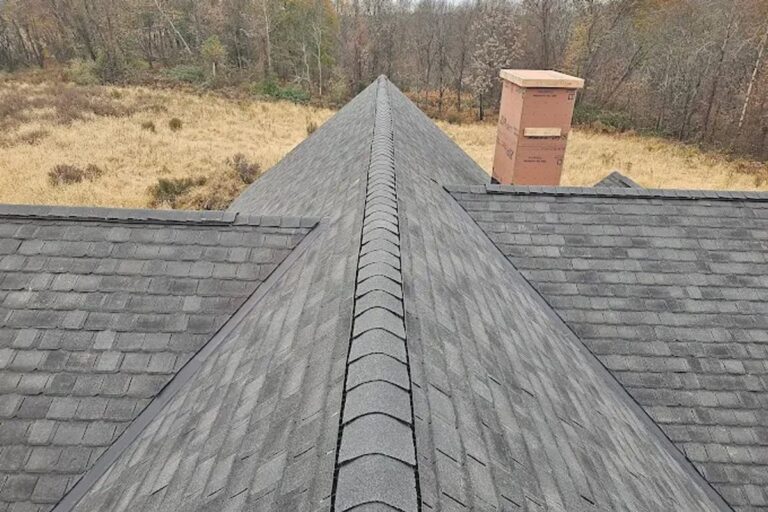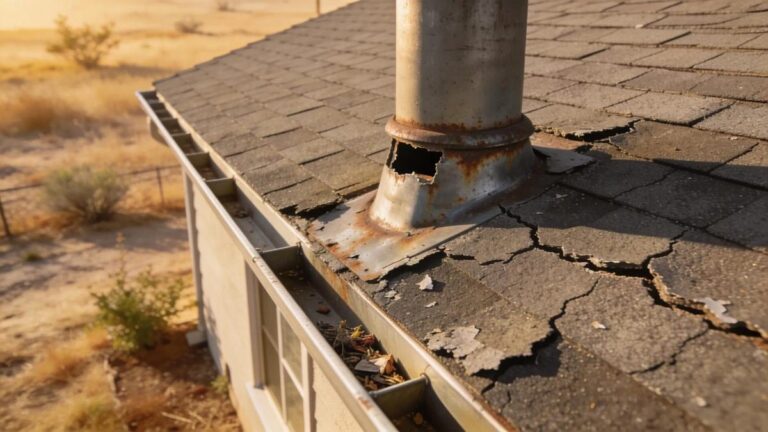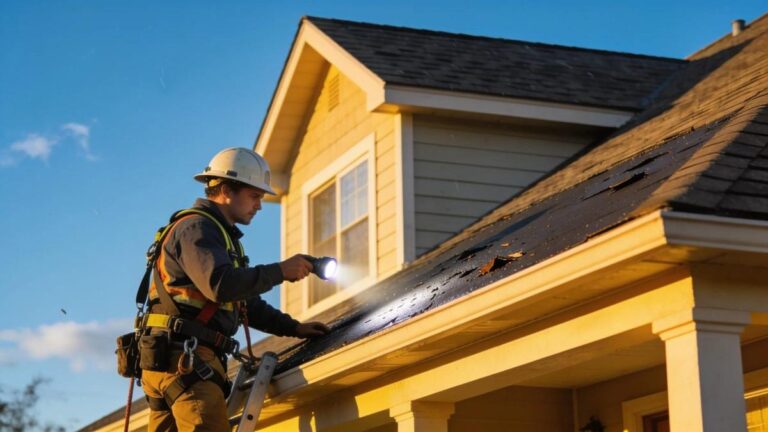
Missing Roof Shingles After a Storm: A Safe, Step-by-Step Response
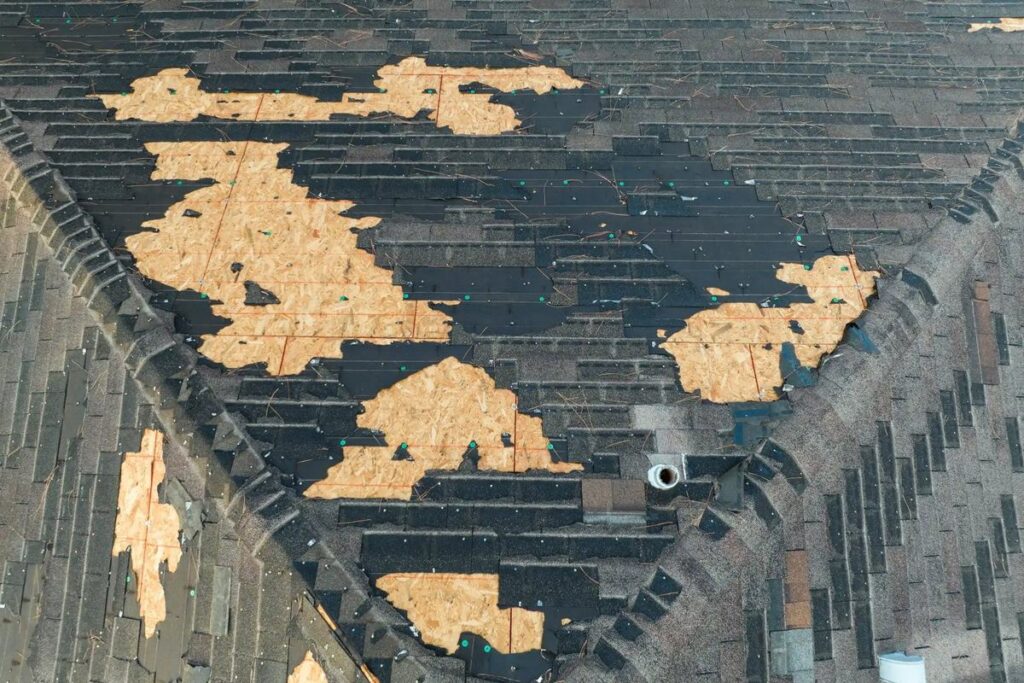
What should you do when shingles go missing after a storm?
Stay off the roof, check from the ground and the attic, photograph everything with the date, and limit water entry until a roofer can repair the opening. Then contact your own homeowners insurer if you plan to ask about coverage, and get a written repair estimate. Speed matters, but safety matters more.
The goal in the first day or two is containment. Missing shingles expose the underlayment and deck to rain, and rain is what turns a small repair into drywall, insulation and framing damage. You do not need to fix the roof yourself to protect the house. You need to see what happened, record it, and keep water out.
Storm-damaged roofs are slippery and unpredictable. The Owens Corning maintenance guidance advises avoiding ladders and roof access in wet conditions, high winds, extreme heat or on steep slopes.
How do you check the damage without climbing up?
Work from the outside in, using the ground and the attic. The Asphalt Roofing Manufacturers Association says homeowners can look for cracked, curled or missing shingles and heavy granule loss from the ground, and advises against climbing onto the roof.
From the yard
- Step back far enough to see each full slope. Binoculars help.
- Look for bare patches, lifted edges, and shingles or pieces on the lawn.
- Check gutters and downspout outlets for granules and fragments.
- Inspect the ridge, rakes and corners first, where wind catches.
From the attic
- Use a flashlight to look for daylight, damp insulation or dark stains on wood. Owens Corning suggests paying attention to areas around vents and chimneys.
- Touch the underside of the deck. Soft or damp wood points to a water path.
Inside the living space
- Look at ceilings and upper walls for new stains, drips or bubbling paint.
- Check closets and corners below the damaged slope.
If you find an active drip, set a bucket under it and move belongings. Our guide to temporary roof leak fixes lists what is reasonable to do from inside the house.
How strong does the wind have to be to strip shingles?
Strong, but less than you might think when the roof is old or the nailing was off. The National Weather Service defines a severe thunderstorm as one that produces a tornado, winds of at least 58 mph, or hail at least 1 inch across, and says structural wind damage may imply a severe thunderstorm occurred. It also treats 40 mph winds and half-inch hail as approaching severe.
New Jersey’s wind events are not limited to summer thunderstorms. The NOAA-backed 2025 State Climate Summary for New Jersey describes nor’easters as cold-season coastal storms that can bring heavy snow, sleet or freezing rain, strong winds and flooding.
Wind rating on the shingle matters too. PNNL’s guidance notes that shingles are rated to ASTM D3161 and D7158 classes, and that codes require at least four fasteners per strip, with six recommended in high-wind areas. A shingle that fails in a moderate storm is often a nailing, sealing or age problem. Our companion article explains why shingles come off in detail.
What should you photograph and write down?
Records help you in any conversation with your insurer or a contractor, and they cost nothing. This is general homeowner guidance, not a Hidalgo service.
- Date and time of the storm and what you noticed (loud wind, debris, power flicker).
- Wide photos of each side of the house showing the roofline.
- Close photos of bare areas, exposed underlayment and any fallen shingles.
- Photos of gutters, siding, fences and trees that show impact marks.
- Interior photos of any stains, with a coin or tape measure for scale.
- A short written list of repairs you make and the receipts.
Keep pieces of shingle you pick up from the yard. They show age, color and whether they tore at the nails or at the sealant.
Contact your own homeowners insurer promptly if you think the loss may be covered, and ask what they require. Policy terms, deductibles and deadlines differ, so read yours rather than assuming.
How do you keep water out until the repair?
Use the least risky option that works. For anything beyond a few shingles, a roofer tarping the area is safer than a homeowner on a ladder in wind.
| Situation | Practical step | Who should do it |
|---|---|---|
| Small bare spot, dry roof, low pitch | Roofer replaces shingles or applies temporary cover | Roofer, or careful homeowner |
| Large missing section | Tarp over the opening, secured at the ridge side | Roofer |
| Active drip indoors | Bucket, plastic, move furnishings, relieve bulging ceiling | Homeowner |
| Damp attic insulation | Photograph, remove soaked material if safe | Homeowner |
| Steep or tall roof | Do not climb; call a roofer | Roofer |
Ask any contractor you call whether temporary covering is something they do, and what it costs, since not every company offers it. Our overview of patching a roof after storm damage walks through the sequence a roofer follows.
Work on the roof should wait for dry weather. Rain on exposed underlayment is survivable for a short time, but exposed decking is not.
Is it a repair or a roof replacement?
It is a repair when the damage is local, the deck is dry and the surrounding shingles are flexible and well sealed. It leans toward replacement when the roof is already old, when shingles are failing across multiple slopes, or when the storm exposed hidden wear.
Owens Corning’s signs of replacement include curling edges and heavy granule loss. Estimates put three-tab shingles at about 20 years and architectural at about 30, so the roof’s age is a clue to how much more life it has. A patch on a 25-year-old roof may hold, but other shingles may be close behind.
Be careful about “storm chasers” and anyone who pressures you to sign on the spot. New Jersey home improvement contractors must be registered with the state, and contractors should provide a registration number. Our guide to choosing a trustworthy roofer in NJ covers what to verify.
What does a storm damage roof inspection cover?
A proper storm inspection looks well beyond the obvious gap. A roofer examines the whole roof surface, flashing, pipe boots, ridge, gutters and attic, then explains what is urgent and what can wait. They should be able to show photos and describe the repair in writing.
Hidalgo Brothers works on storm damage roof repair for homes across Morris County and nearby counties, starting with a free, written, no-pressure estimate. Request one on the free estimate page. Homeowners in Denville can also see how the company works in town on the Denville service page.
Frequently asked questions
Is one missing shingle a big deal?
One missing shingle exposes the underlayment, which is a backup layer and not meant to be the final barrier. Water can reach the deck during the next heavy rain or wind-driven storm. It is usually a small repair if caught early, so schedule it rather than waiting.
Can you temporarily cover the hole yourself?
Only if you can do so safely from the ground or a stable ladder with the roof dry and calm. Tarps are heavy and catch wind. A poorly secured tarp can tear more shingles. If the area is high, steep or large, let a roofer handle covering it.
Will wind damage always show up inside the house?
No. Water may soak insulation and deck for weeks before a stain appears. That is why an attic check after a storm is worth doing even when ceilings look fine. Look for damp insulation, dark wood and daylight through the roof boards.
How long do you have to report storm damage to your insurer?
Deadlines are set in each policy and by state rules, so there is no single answer. Read your policy or call your agent soon after the storm and ask what notice and documentation are required. Prompt notice and clear photos make later steps easier.
Do missing shingles mean you need a new roof?
Not necessarily. A healthy roof that lost a few shingles to a strong gust can be repaired. If the roof is near the end of its life or many shingles have failed, a replacement estimate is worth getting alongside the repair estimate.
Should you save the shingles that blew off?
Yes. Keep a few in a dry spot. They show the roof’s age and brand, help a roofer find a match, and can show whether the shingles failed at the sealant strip or at the nails. Photograph them where you found them first.
Sources and further reading
- Owens Corning: Cleaning Roof Shingles and Maintenance Tips (accessed 2026-11)
- Asphalt Roofing Manufacturers Association: Frequently Asked Questions (accessed 2026-11)
- National Weather Service Binghamton: Severe Weather Definitions (accessed 2026-11)
- NOAA NCICS: 2025 State Climate Summary for New Jersey (accessed 2026-11)
- PNNL Building America Solution Center: Asphalt Shingle Roofs (accessed 2026-11)
- Owens Corning: 3 Signs That It’s Time to Replace Your Roof (accessed 2026-11)